Shapes Worksheets for Kids
Free printable shape sheets, trace, count, match, and find circles, squares, triangles, and more through play.
A child\u2019s first geometry
Long before "geometry" appears in school, children are already doing it: noticing that wheels are round, that doors are not, that a slice of pizza is a triangle. Shape worksheets give that natural noticing a vocabulary and a set of hands-on games. The payoff goes beyond math. Telling shapes apart trains the same visual discrimination that later tells b from d and 6 from 9.
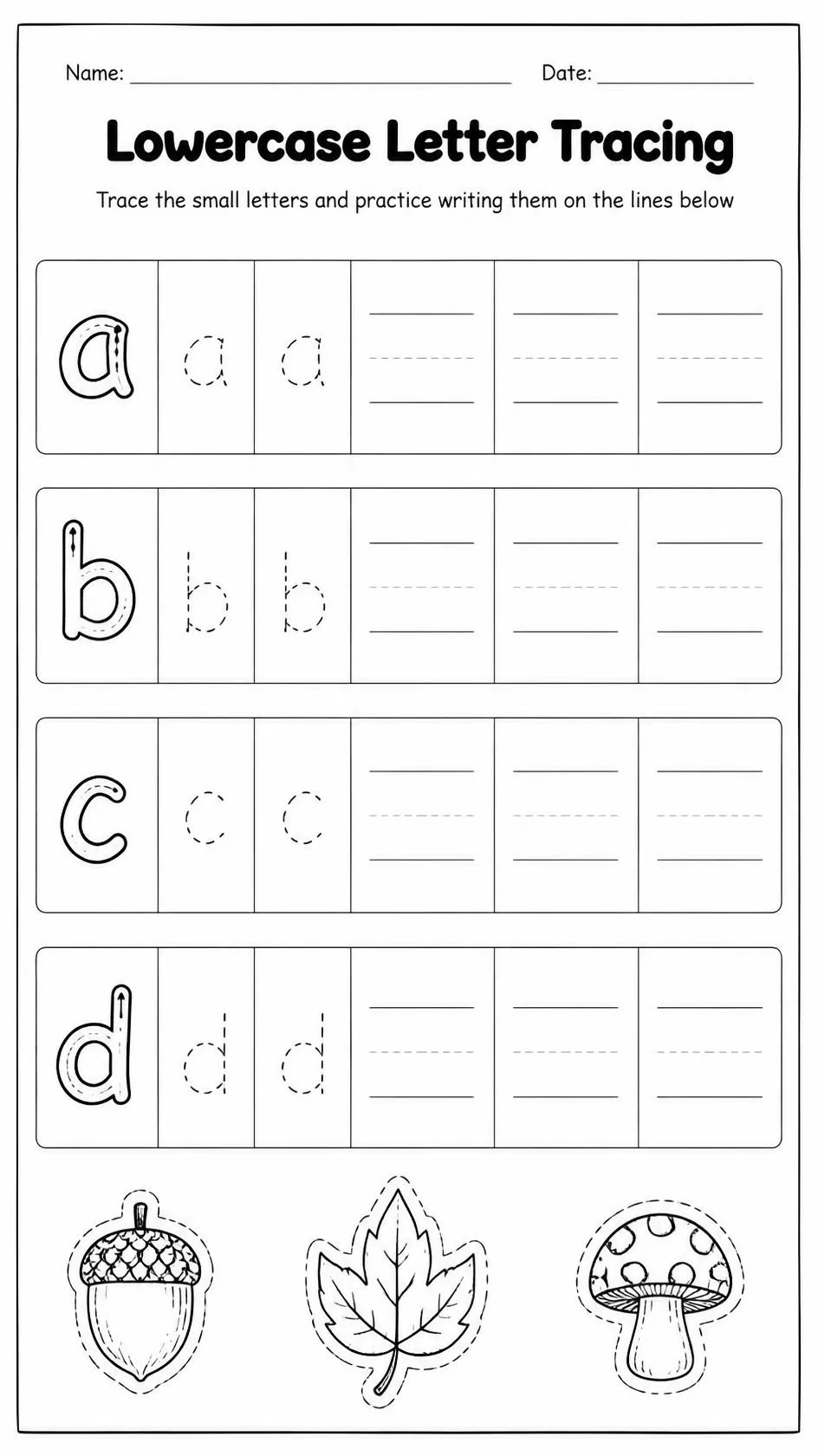
The sheets below work through four kinds of shape play. Tracing shapes builds motor control and teaches the feel of each form. Counting shapes inside busy pictures builds focused attention. Matching games sharpen the eye for sameness and difference. And find-the-shape scenes connect the flat worksheet to the round, square world outside it.
The order that works
Start with the circle. One continuous curve, no corners, the easiest shape to recognise and the most satisfying to draw. Then square and triangle together, contrasting "four corners" with "three corners" out loud as you point. Rectangle follows naturally as "a stretched square", then oval as "a stretched circle". Diamond, star, and heart come last; they are lovely but harder to draw and less central.
Teach one shape at a time, and let each one live in the real world for a few days before the next arrives. Find circles at breakfast (plates, oranges), squares on a walk (windows, tiles), and triangles in the kitchen (samosa, pizza slice).
How to use these sheets
- Say the shape\u2019s name every time you point: "trace the triangle, around the three corners."
- Count corners and sides out loud together. That is real geometry vocabulary.
- After the sheet, go on a 2-minute shape hunt around the room.
- Print at 100% scale on A4; shapes should be big enough to trace comfortably.
Ready-to-print pack: 10 shape sheets
Ten sheets from first circles to shape-hunt scenes. Print the set and do one page a day.
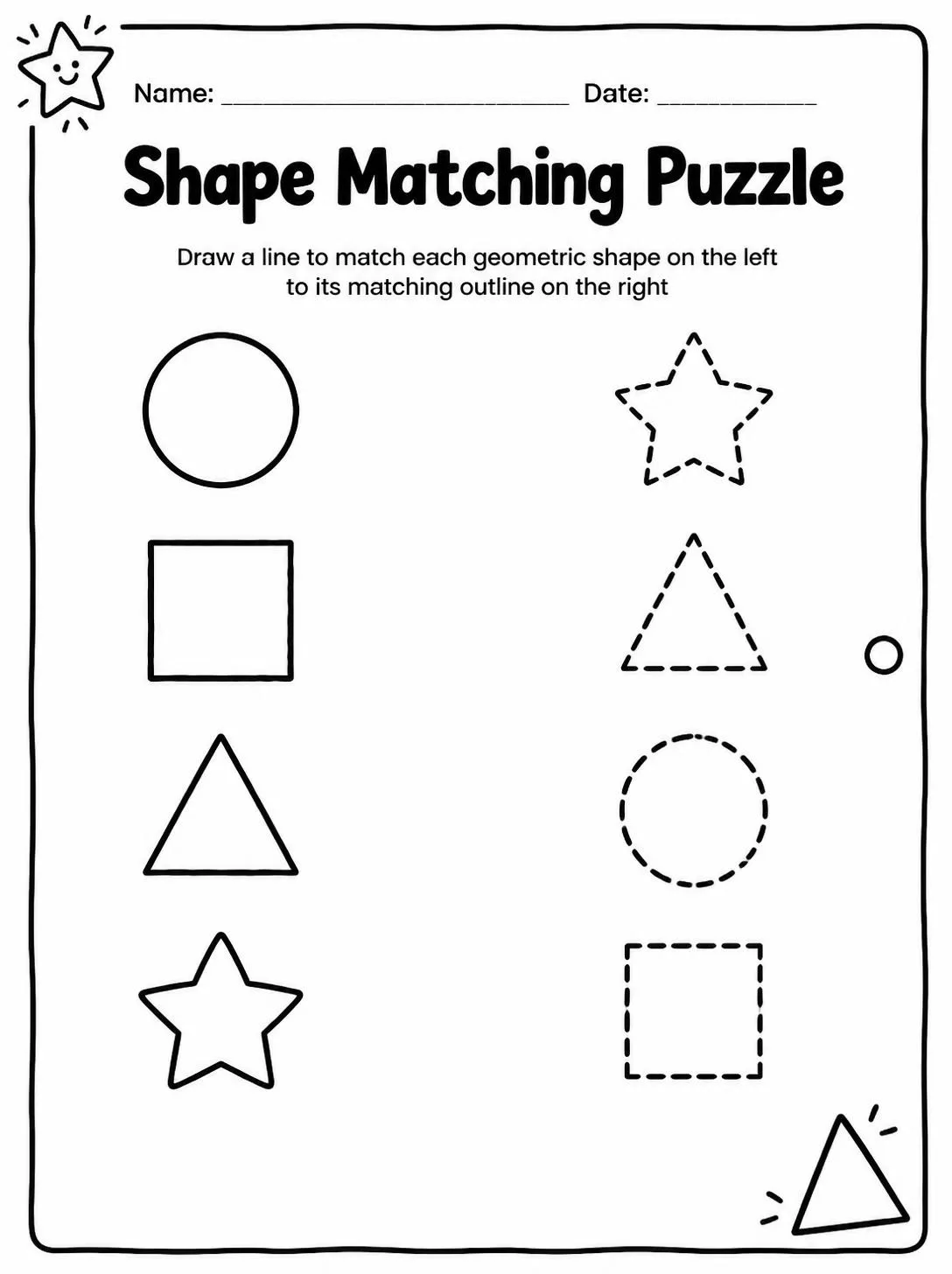
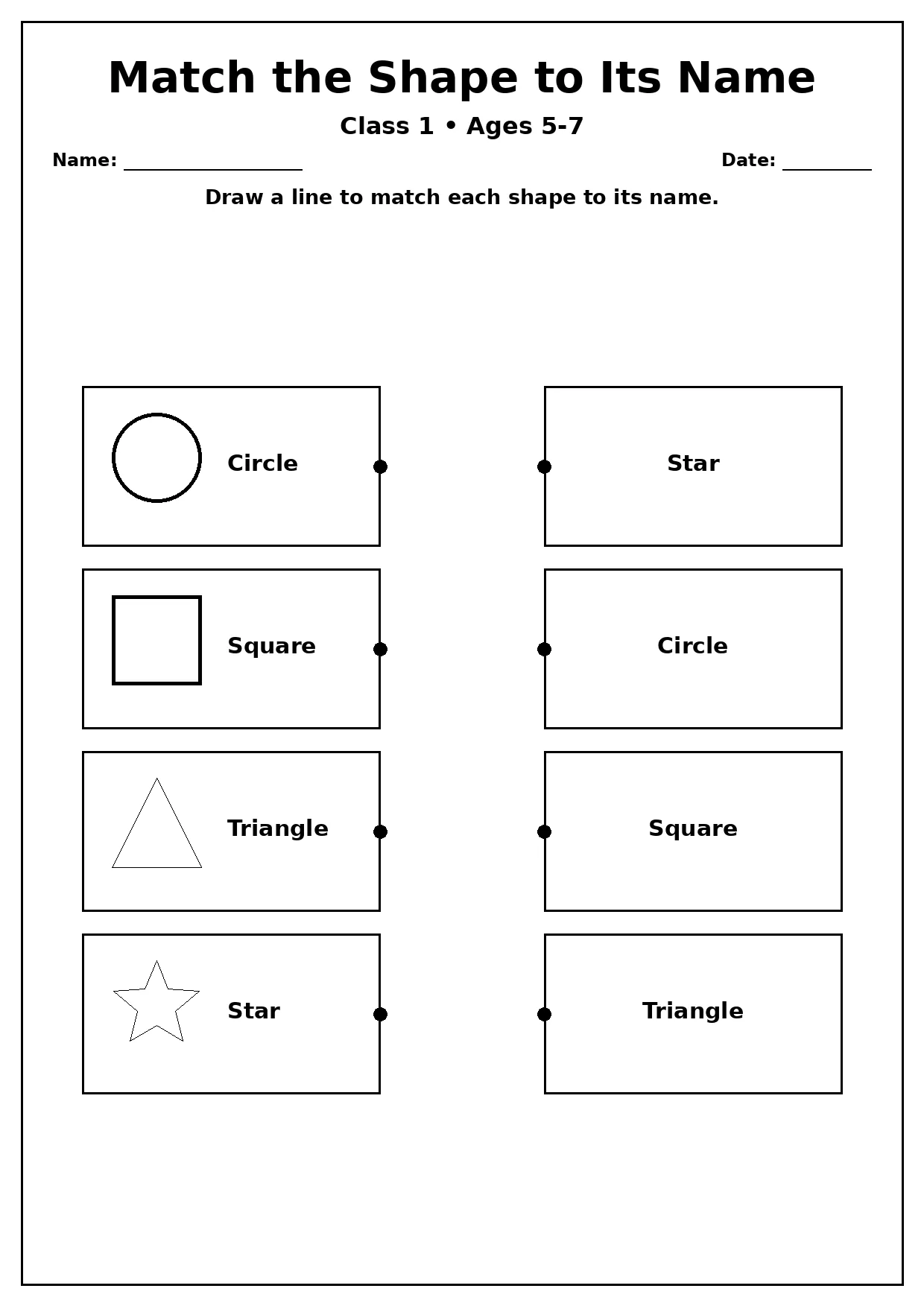
- Basic shape matching puzzle , ages 3-4
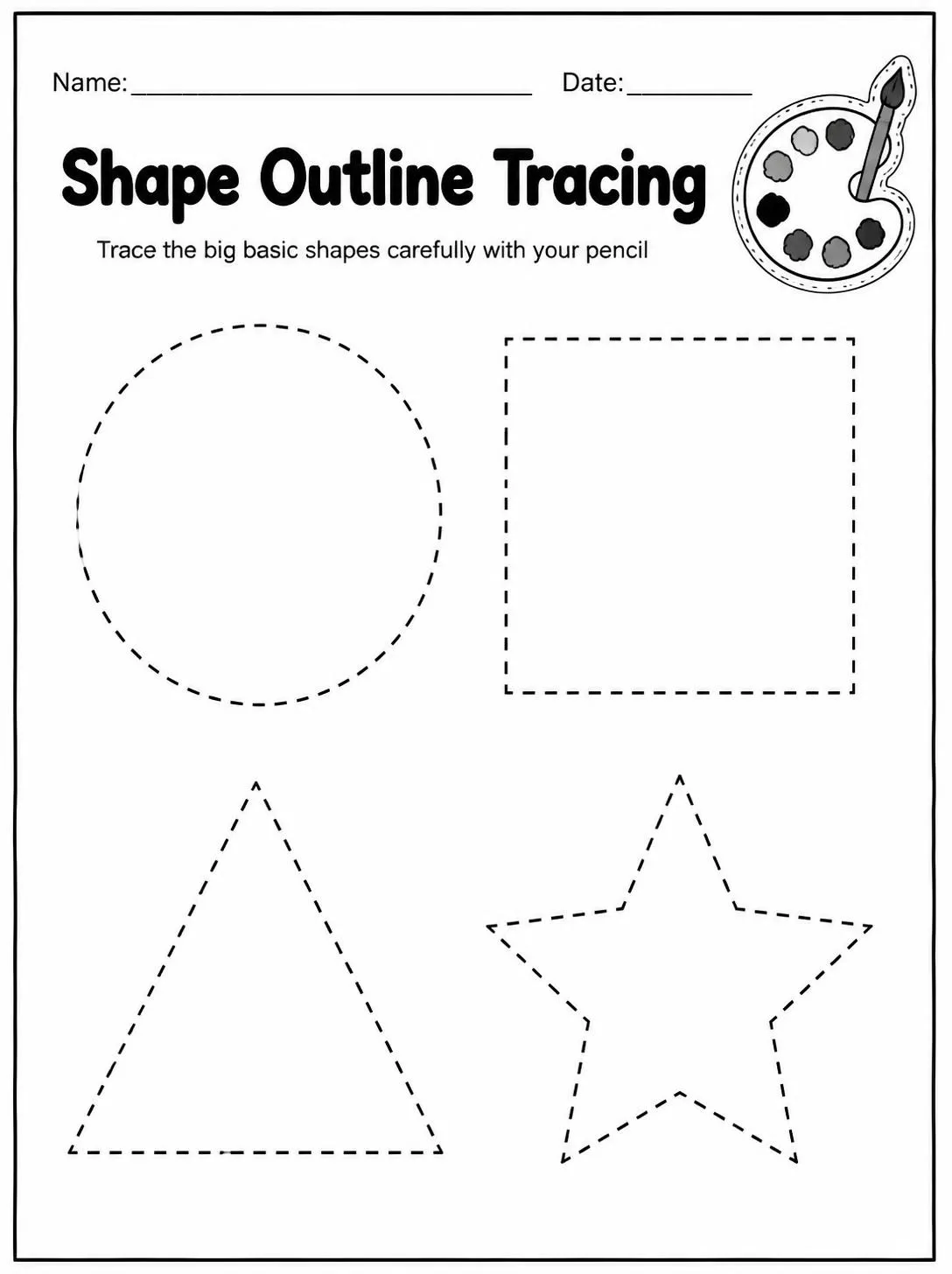
- Basic shape outline tracing , ages 3-4
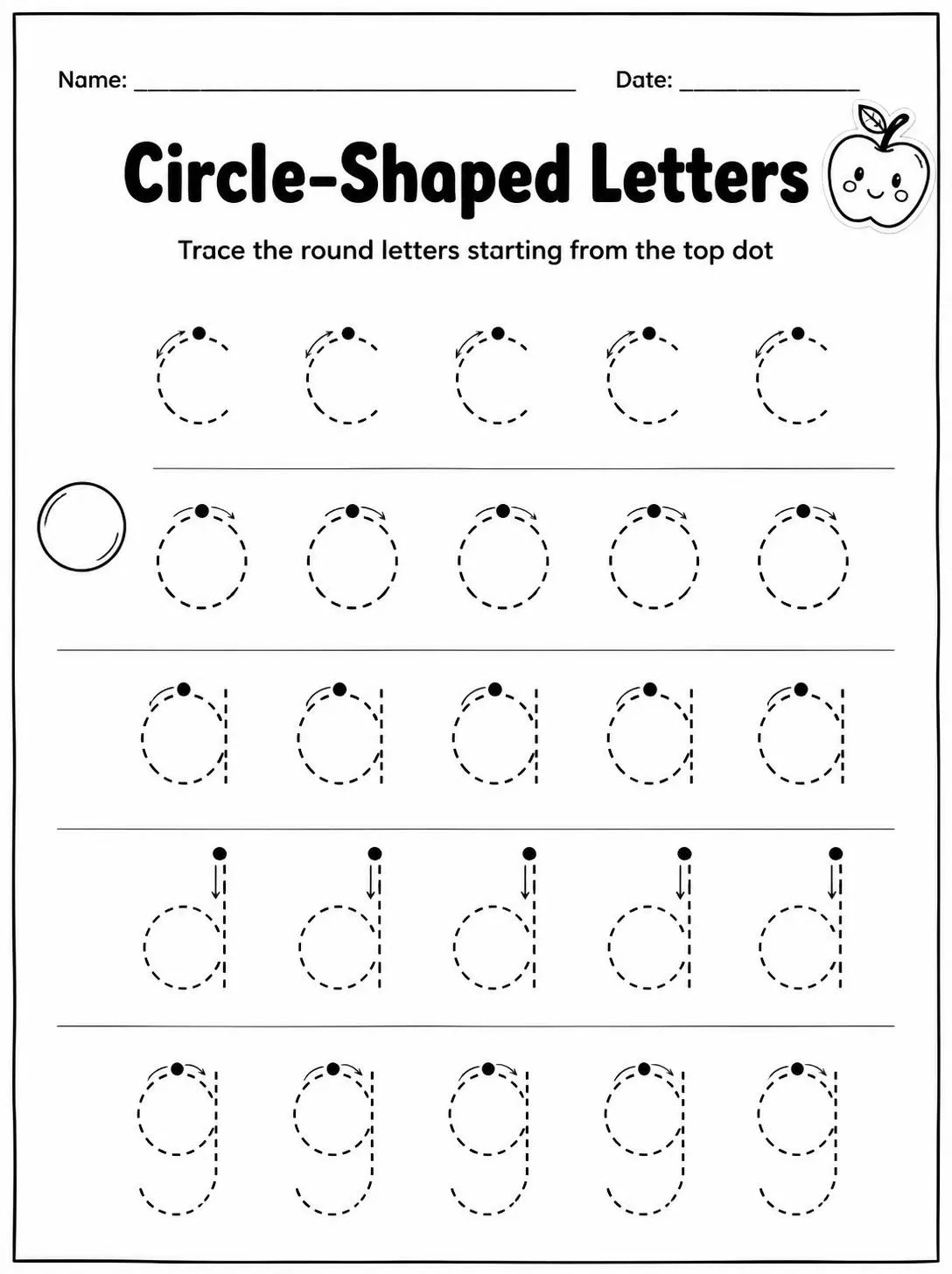
- Circle shaped letter tracing , ages 3-4
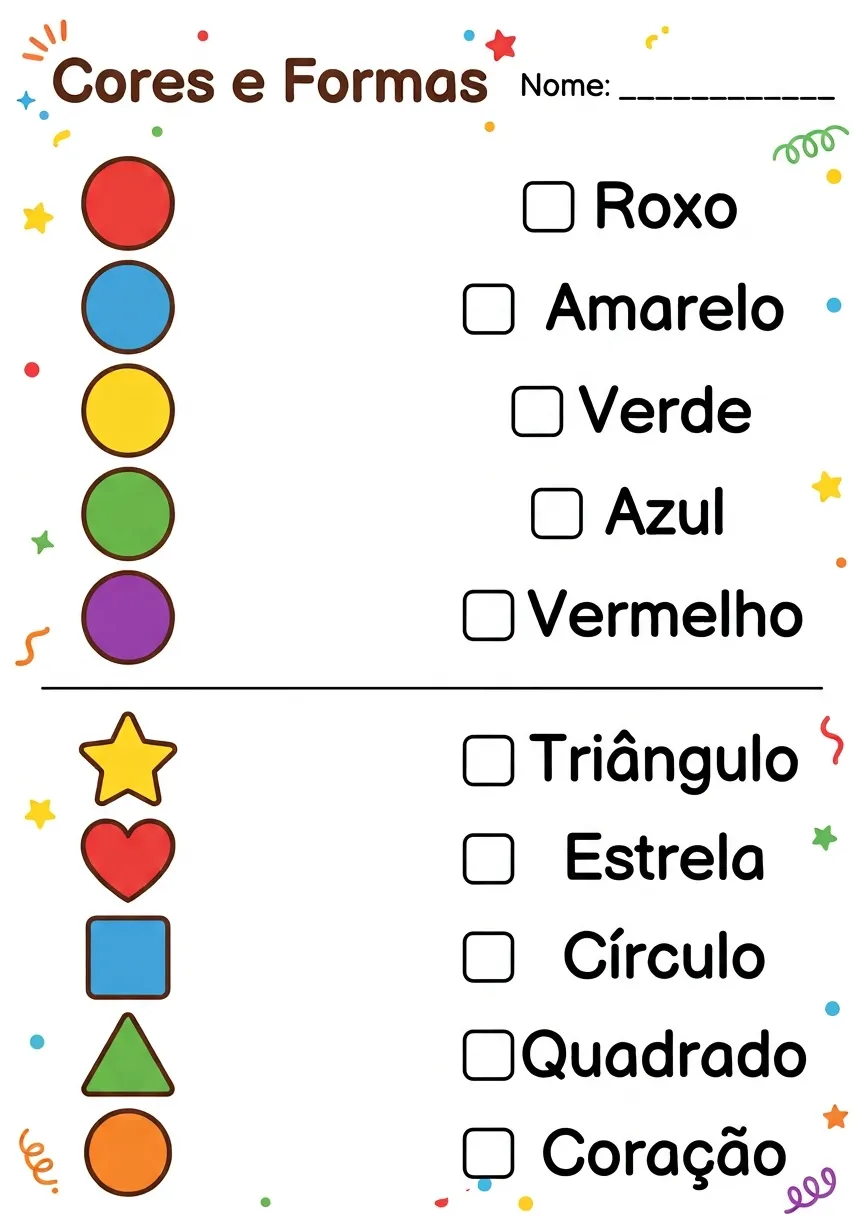
- Cores e Formas Colors and Shapes , ages 3-4
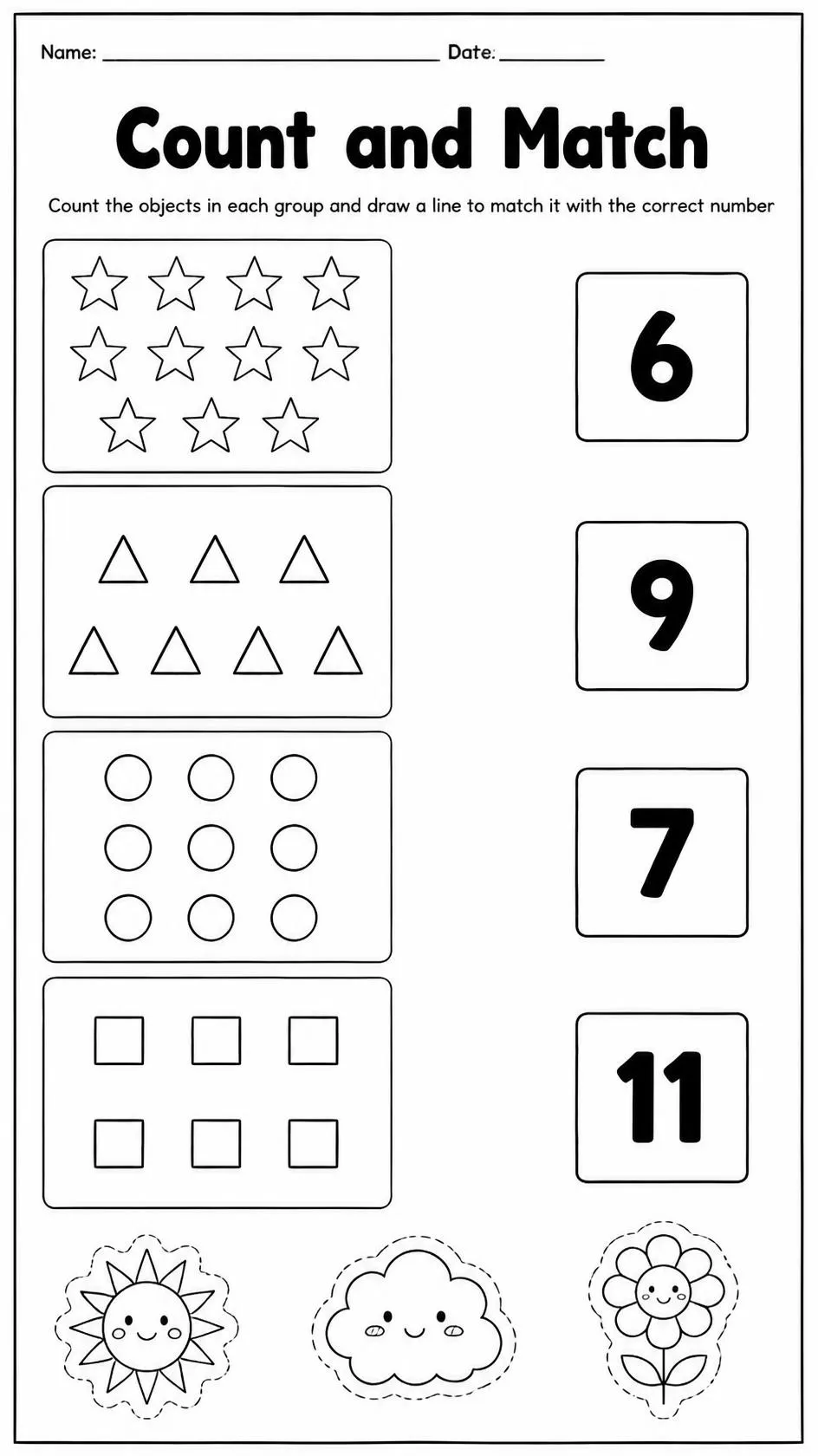
- Count and Match Shapes — Ages 3-4 , ages 3-4
- Count and Match Shapes — Ages 5-6 , ages 5-6
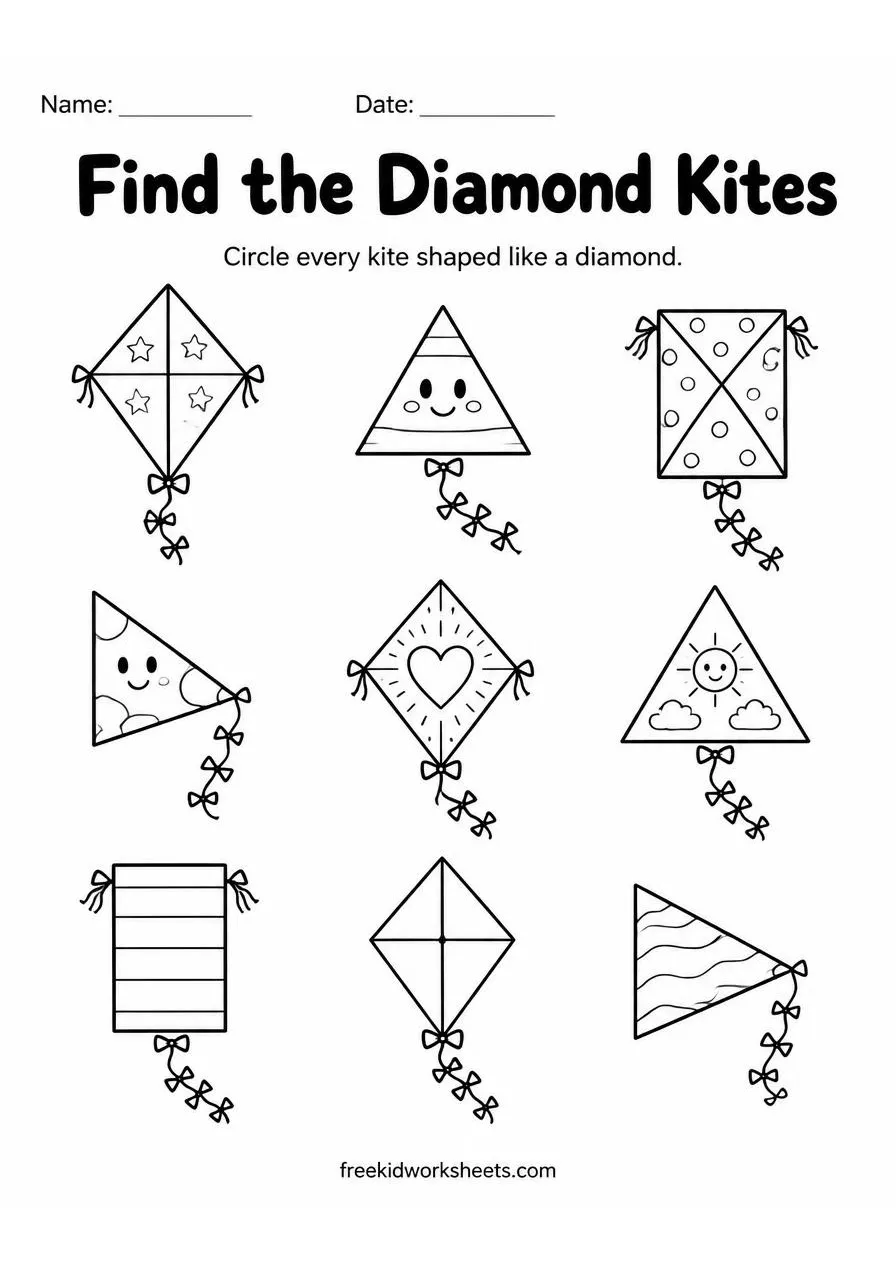
- Find the Diamond Kites , ages 4-5
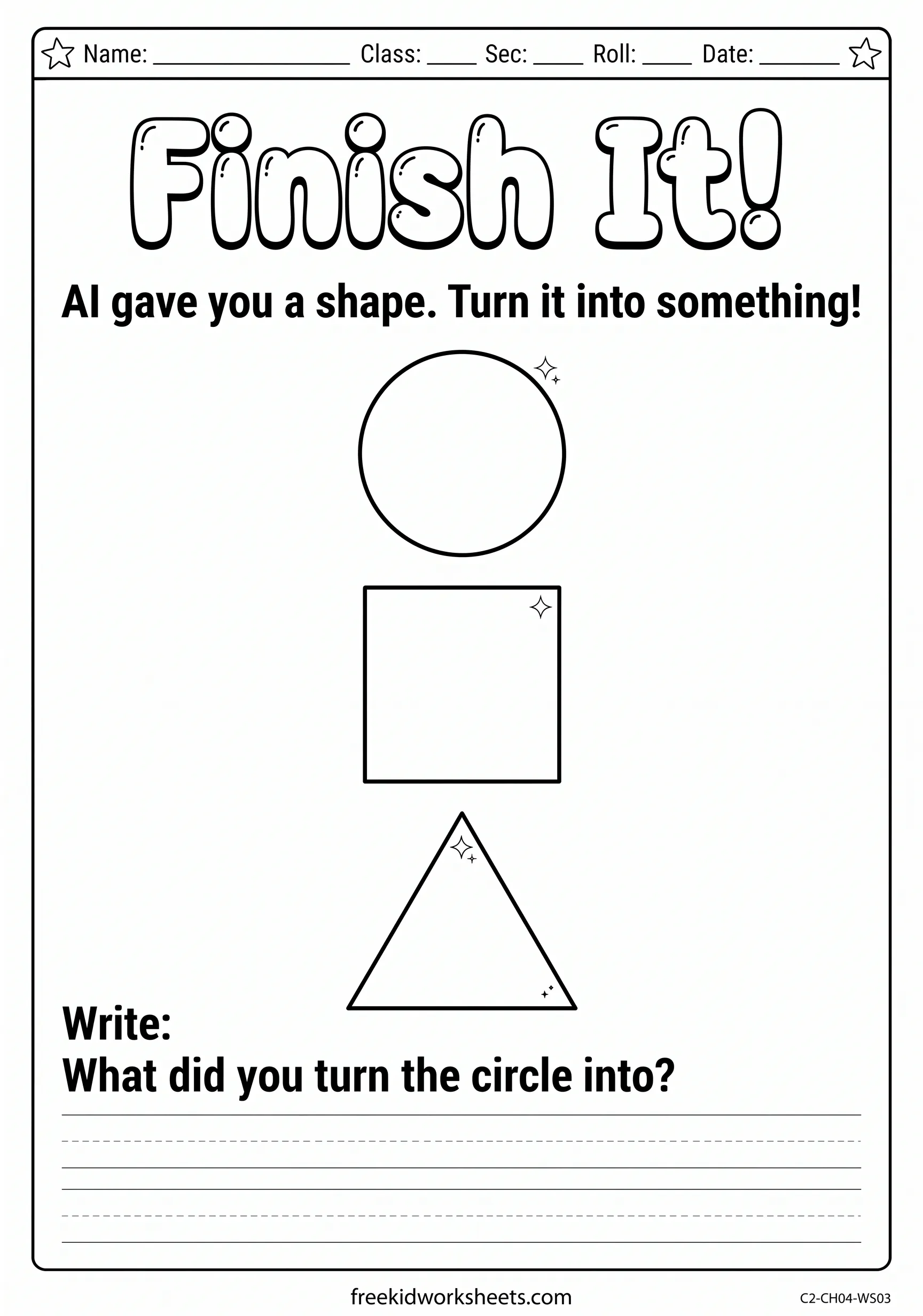
- Finish It! Turn the AI shape , ages 7-8
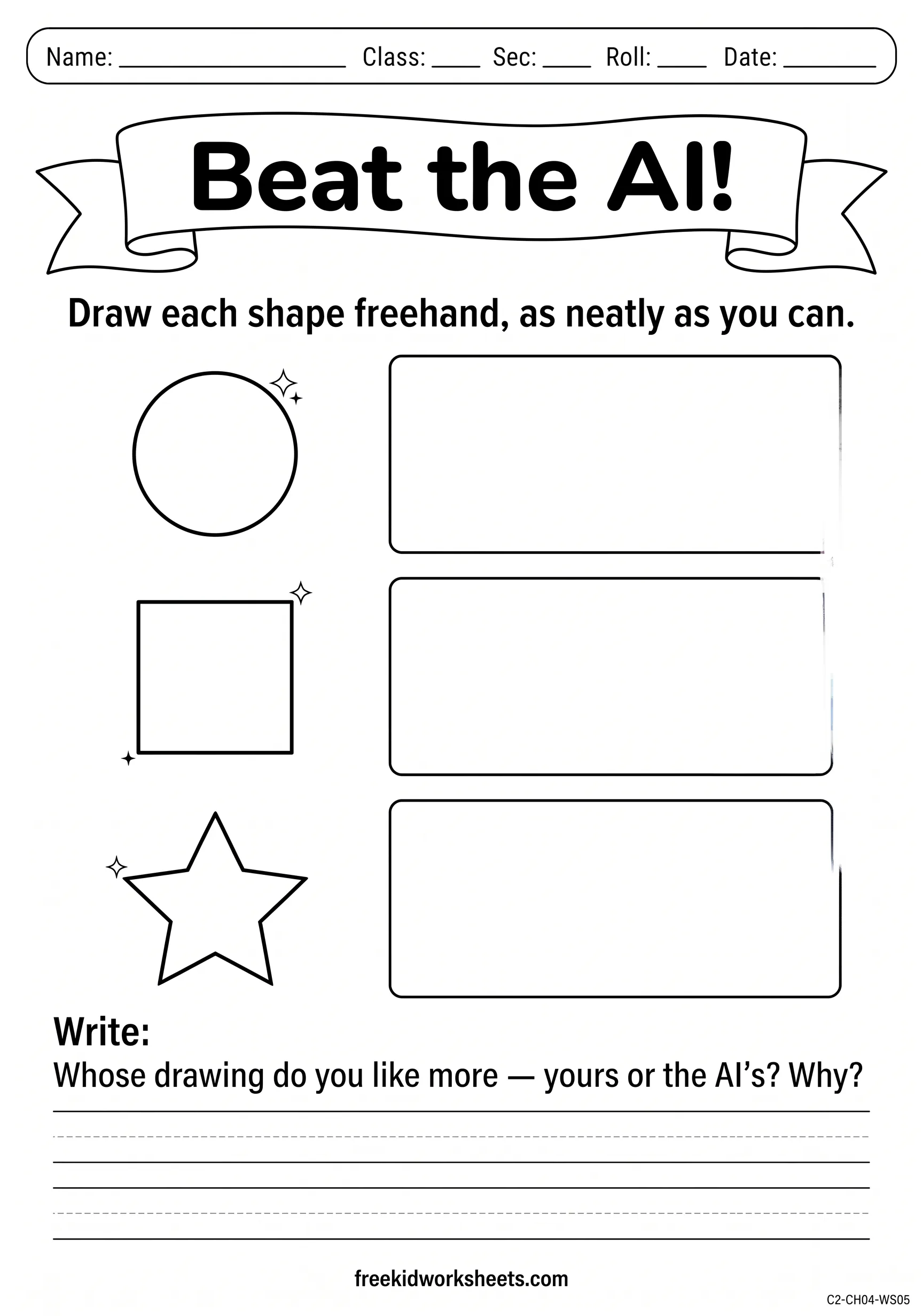
- Freehand shapes draw neatly , ages 7-8
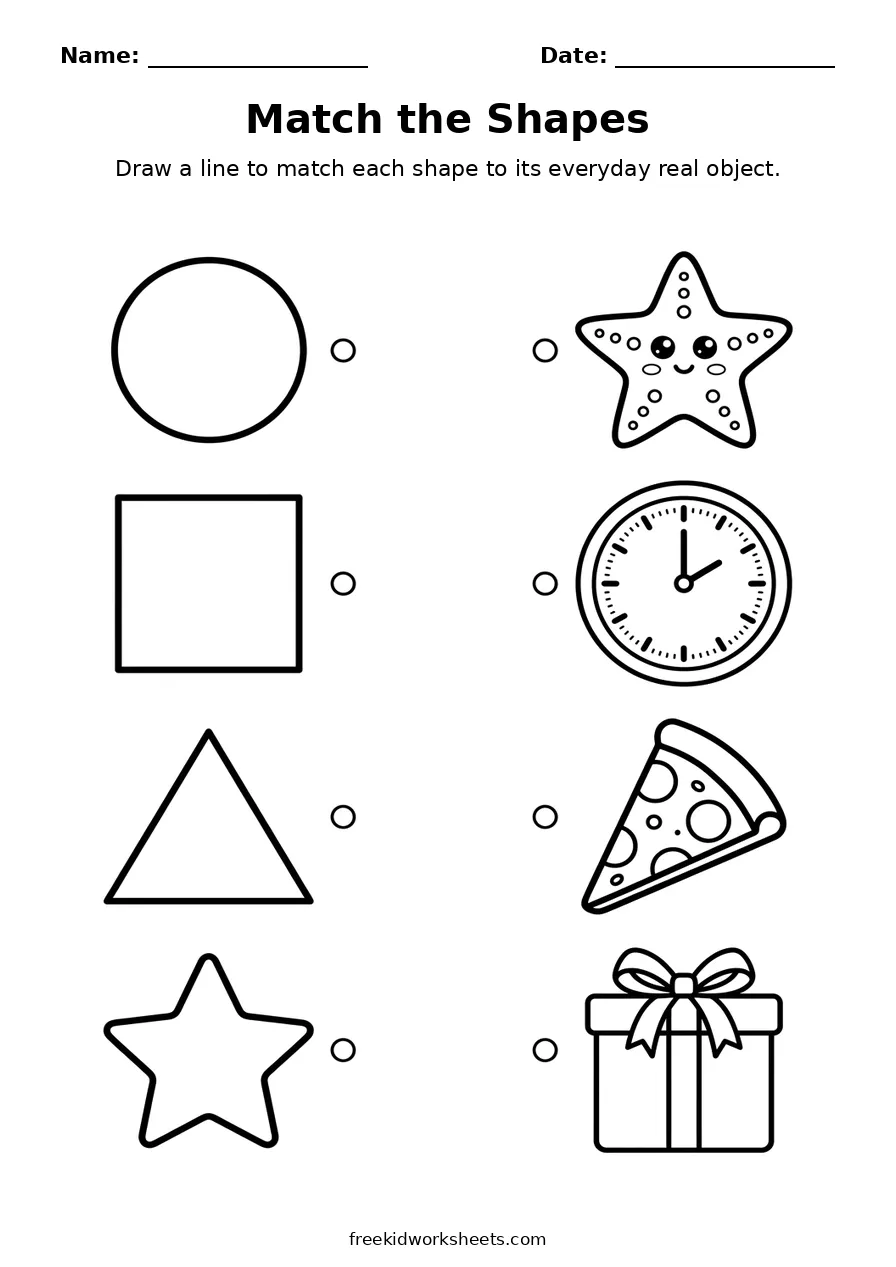
- Geometric shapes match the shapes , ages 3-4
Browse shapes worksheets
Frequently asked questions
- Why do shapes matter for preschoolers?
- Shapes are a child’s first geometry. Recognising and naming shapes trains visual discrimination (spotting differences), which later helps tell letters apart. Sorting by shape is also early logical thinking: grouping things by a rule.
- What order should we learn shapes in?
- Circle first. It is the easiest to recognise and draw. Then square and triangle, then rectangle, oval, and diamond. Stars and hearts can wait; they are hard to draw and not mathematically central.
- My child calls every four-sided shape a square. Is that a problem?
- Not at all. It is actually good thinking: they have noticed the family resemblance. Gently name the differences as you meet them ("a rectangle is a stretched square") and the vocabulary will sort itself out.
- How do these sheets go beyond just naming shapes?
- The sheets ask children to trace shapes (motor control), count shapes in a picture (attention), match shapes (discrimination), and find shapes hidden in scenes (real-world transfer). Naming is only the first step.
- Are these shapes worksheets really free?
- Yes. Every sheet is free to download and print, with no account and no limits. Print the same page as many times as your child wants to practise.
Looking for more? Browse the complete worksheet library or try the counting & numbers guide.