Counting & Number Worksheets
Free printable math sheets that turn counting into a hands-on game, from first 1-to-5 counts to comparing quantities.
Counting before calculating
Every math skill your child will ever learn sits on top of counting. Addition is counting forward, subtraction is counting back, and multiplication is counting in jumps. Sheets that ask children to touch, count, and write numbers are not "easy" work. They are the foundation everything else is built on.
The sheets below always pair numerals with countable pictures. That pairing matters: a child who can recite to 20 but cannot tell you how many apples are on the table has memorised a song, not learned numbers. Count the things, then write the number.
What to expect at each age
Ages 3–4: counting objects to 5, recognising a few numerals, understanding "more". Keep groups small and pictures big, five large apples beat fifteen tiny stars. Ages 5–6: counting to 20, writing numerals, comparing two groups, and simple "how many altogether" questions. Ages 6–7: counting in 2s and 10s, before and after numbers, and the first gentle steps into addition.
Move at your child's pace, not the chart's. A child who counts to 10 confidently is better prepared than one pushed to 100 with wobbling one-to-one correspondence.
How to use these sheets
Count out loud together, with your child touching each picture as they say the number. That touch is what builds one-to-one correspondence. Then let them write the answer themselves, even if the numeral comes out backwards. Correct formation gently by writing it once yourself and letting them trace yours.
- Count real things too: stairs, spoons, buttons in a jar.
- Keep sessions to 10–15 minutes for under-6s.
- Reprint favourites. Fluency comes from repetition.
- Celebrate the counting, not just the right answer.
Ready-to-print pack: counting starter set
Ten sheets in difficulty order, from counting to 5 up to comparing groups. Print the set and do one page a day.
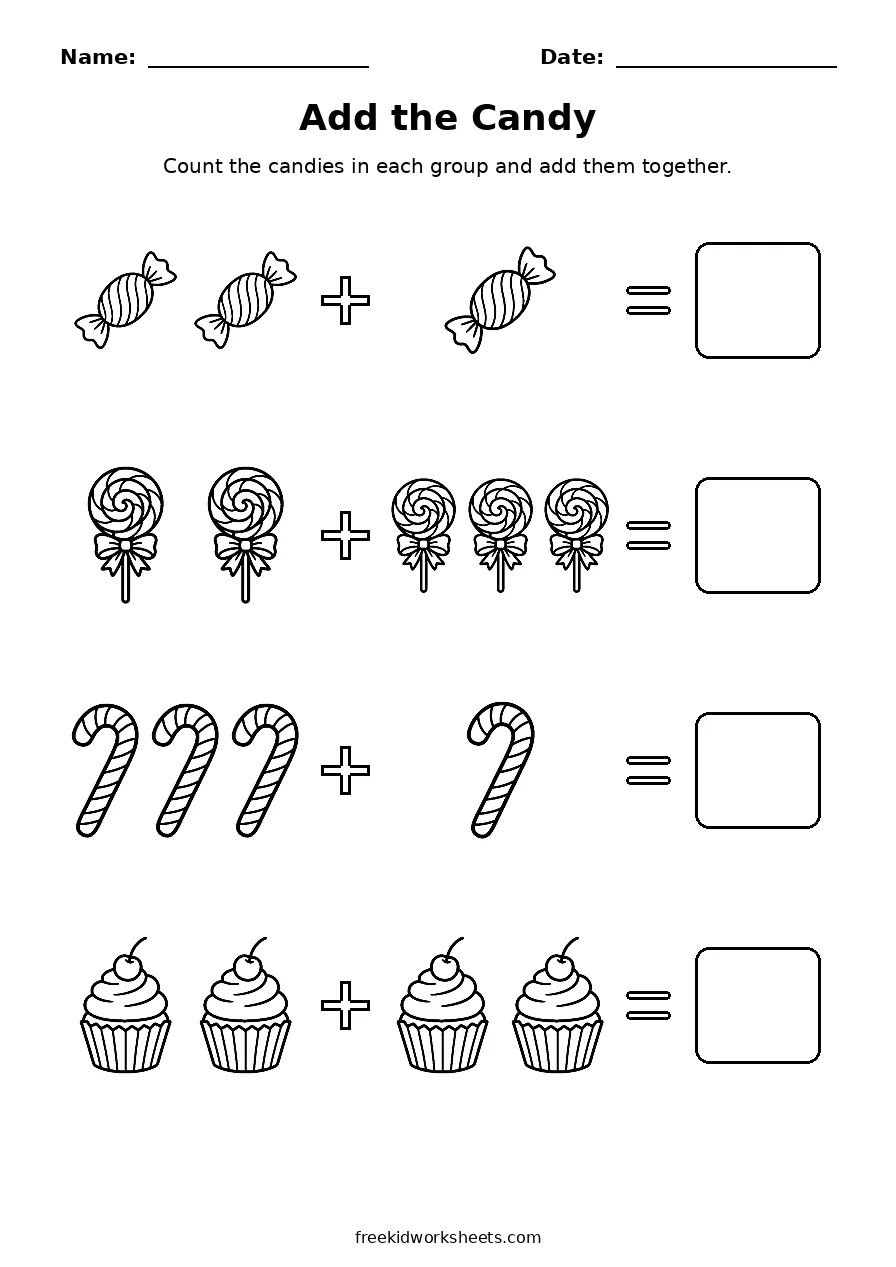
- Add the candy , ages 7-8
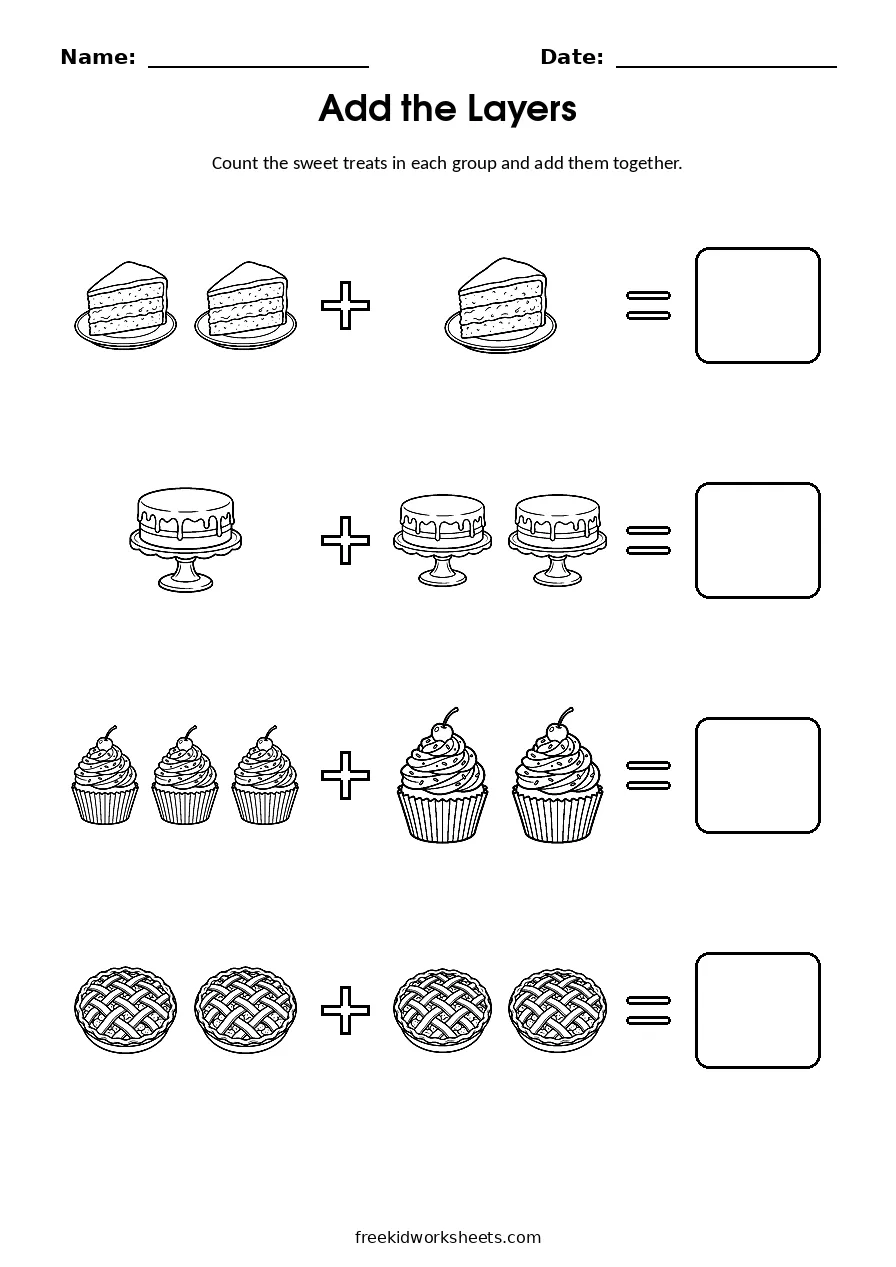
- Add the layers add with pictures , ages 7-8
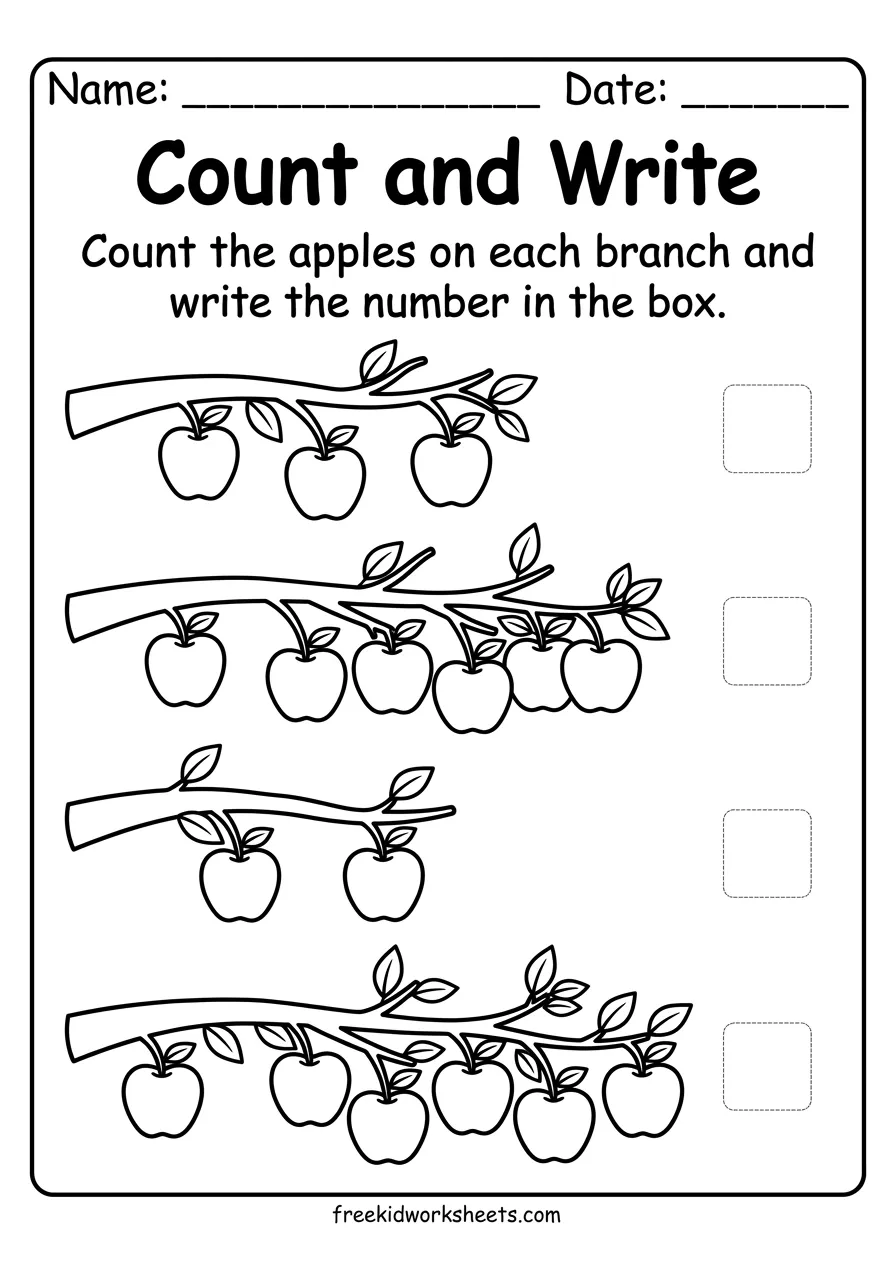
- Apples on branch count and write , ages 5-6
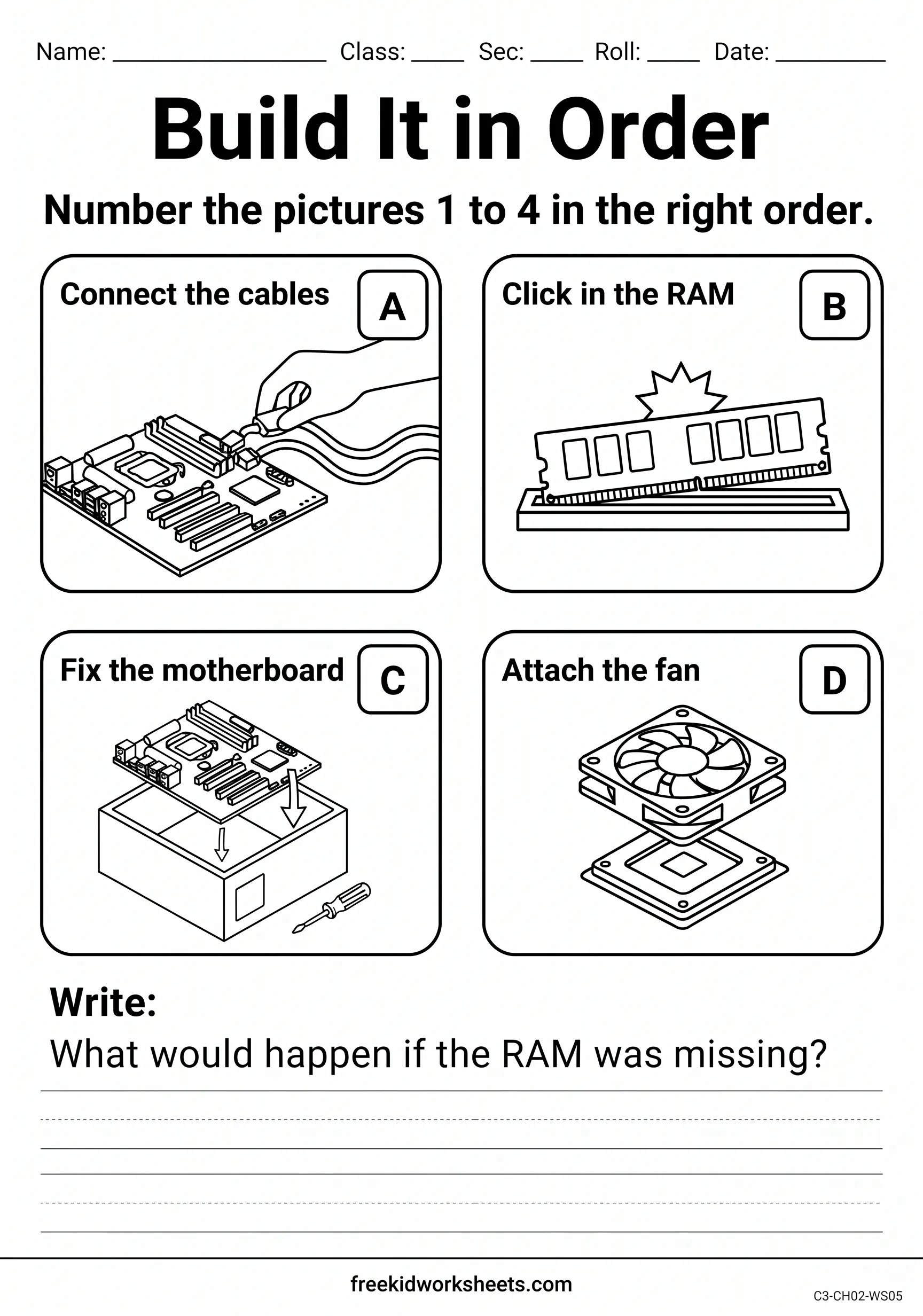
- Assembly order number the steps , ages 7-8
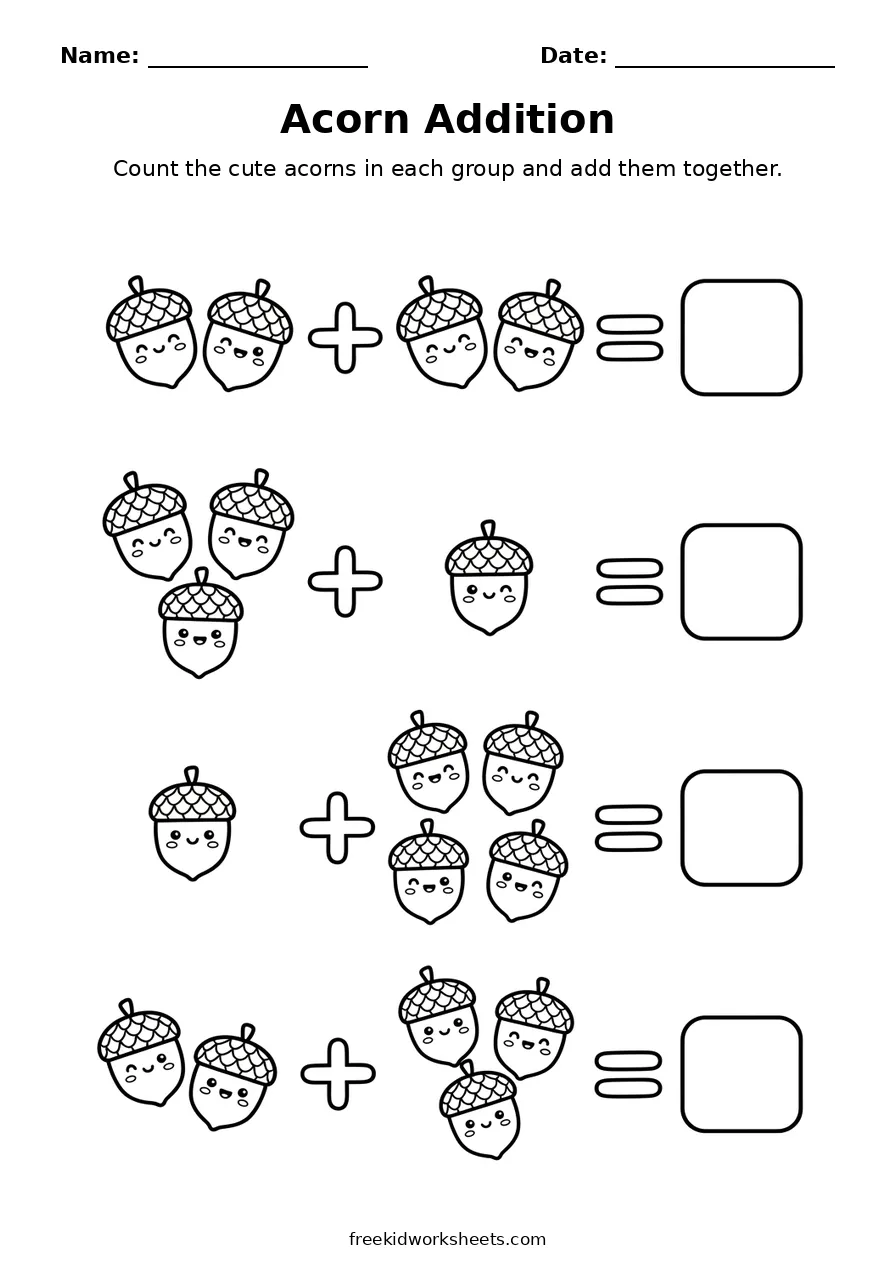
- Autumn acorns add with pictures , ages 7-8
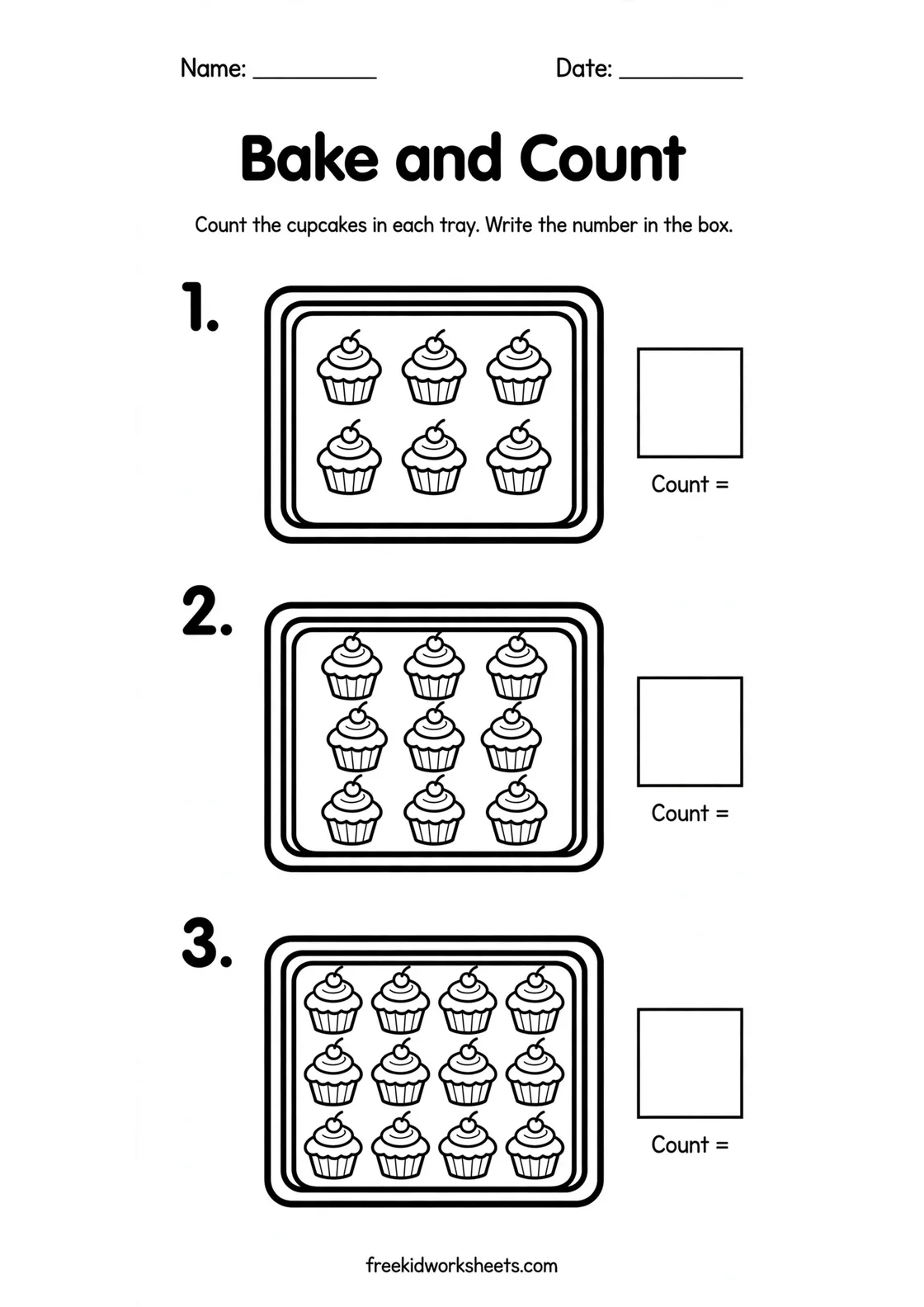
- Bake and Count , ages 6-7
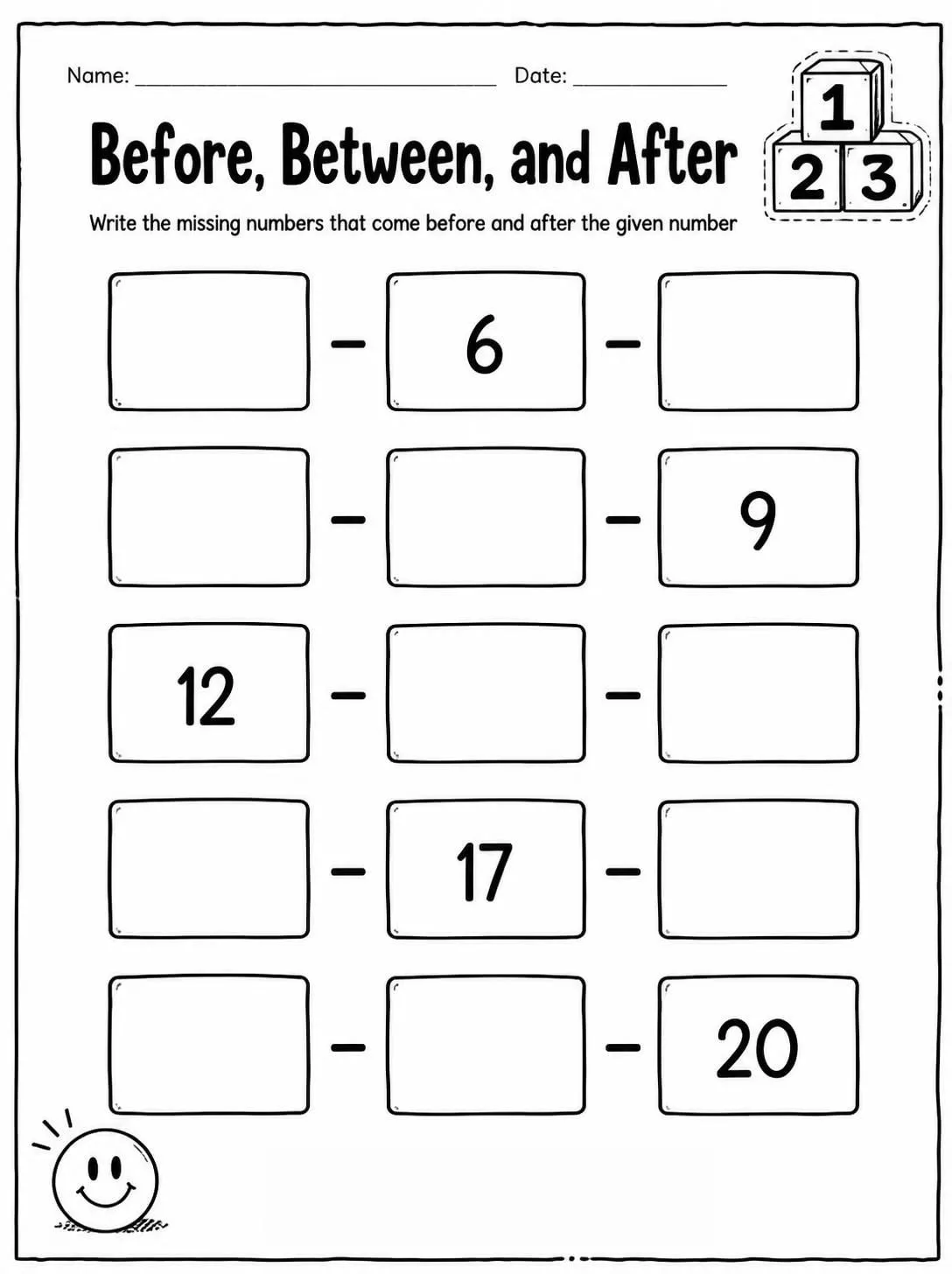
- Before after between numbers , ages 5-6
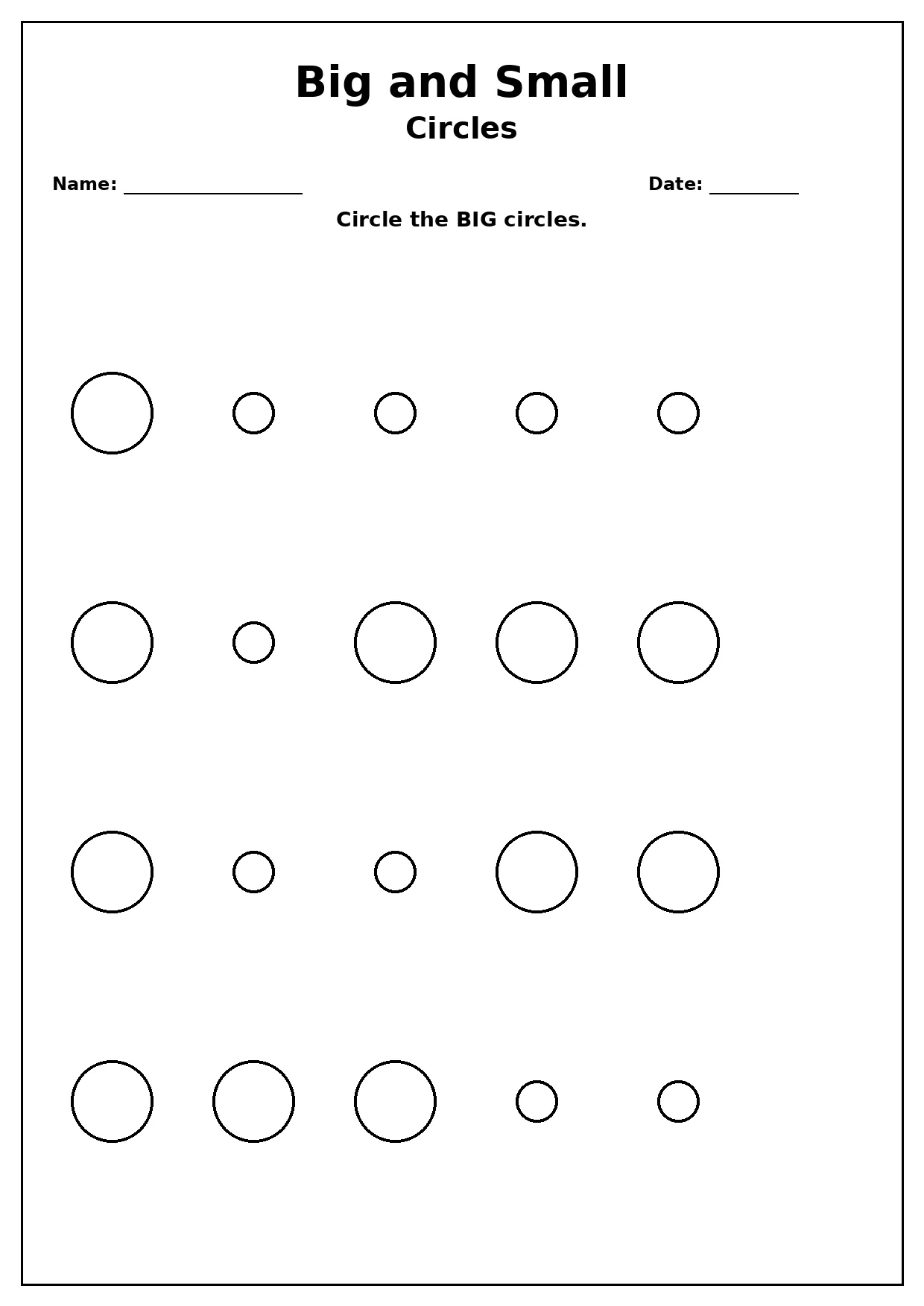
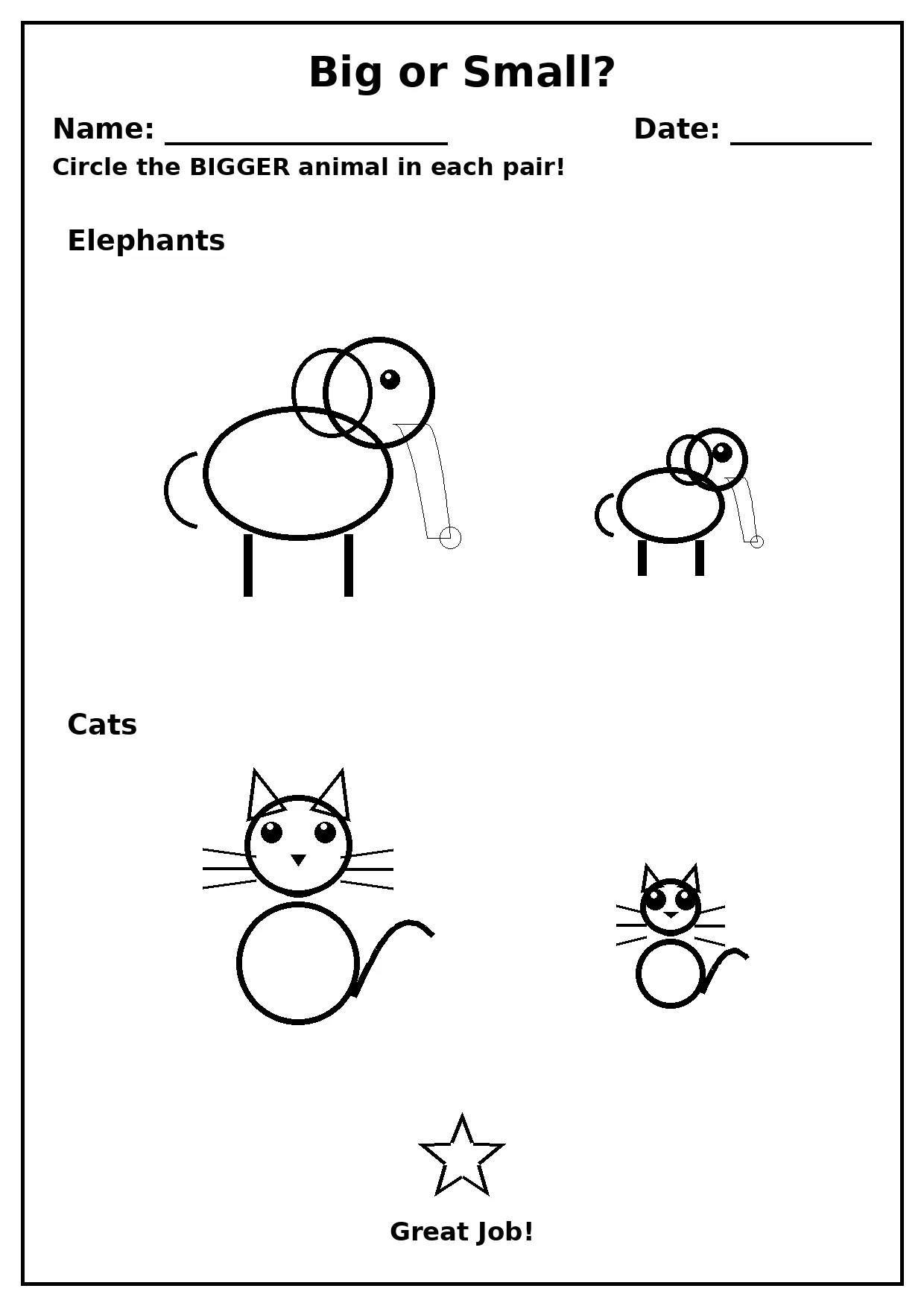
- Big and small circles sorting , ages 3-4
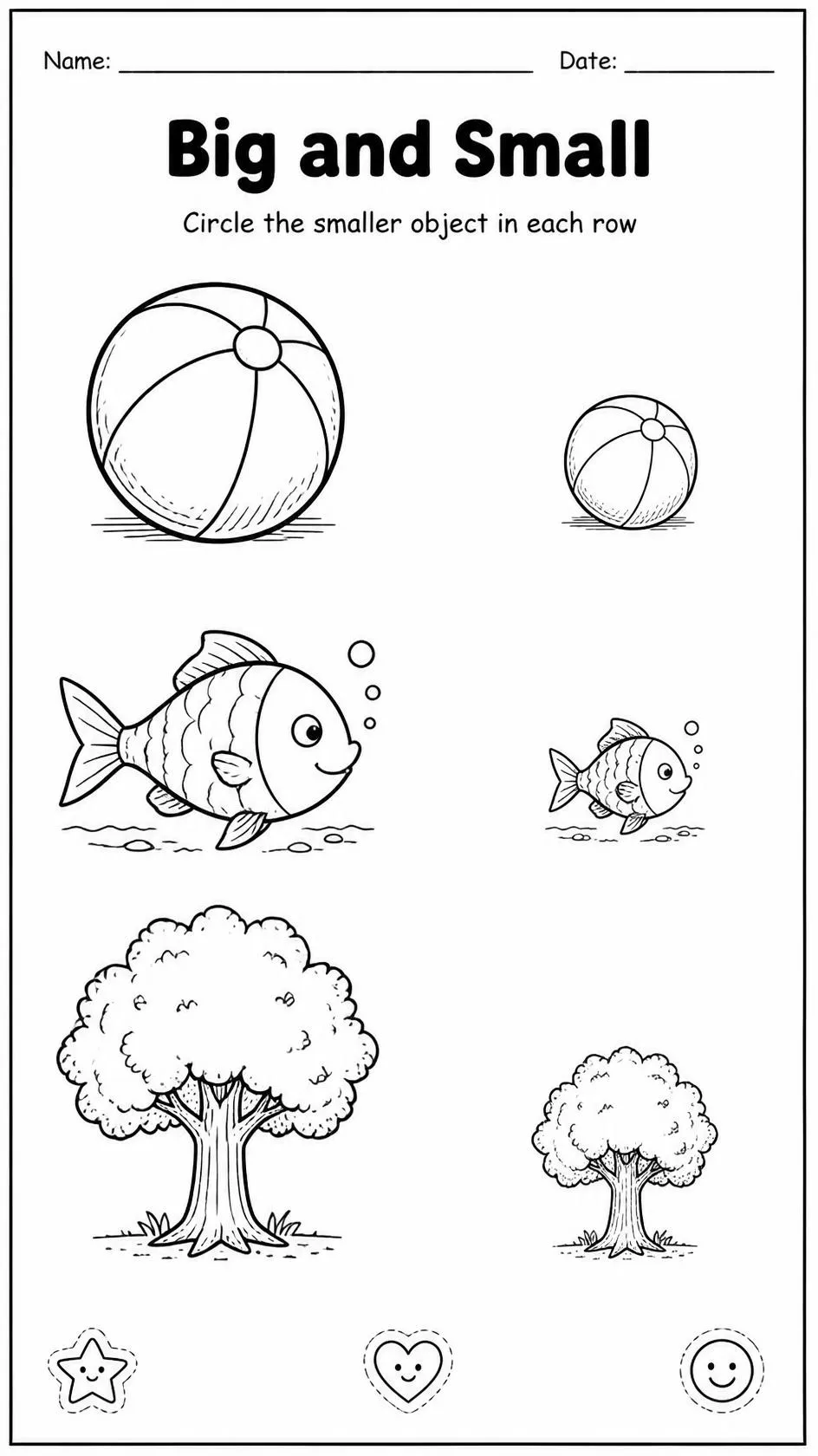
- Big and small comparison worksheet , ages 5-6
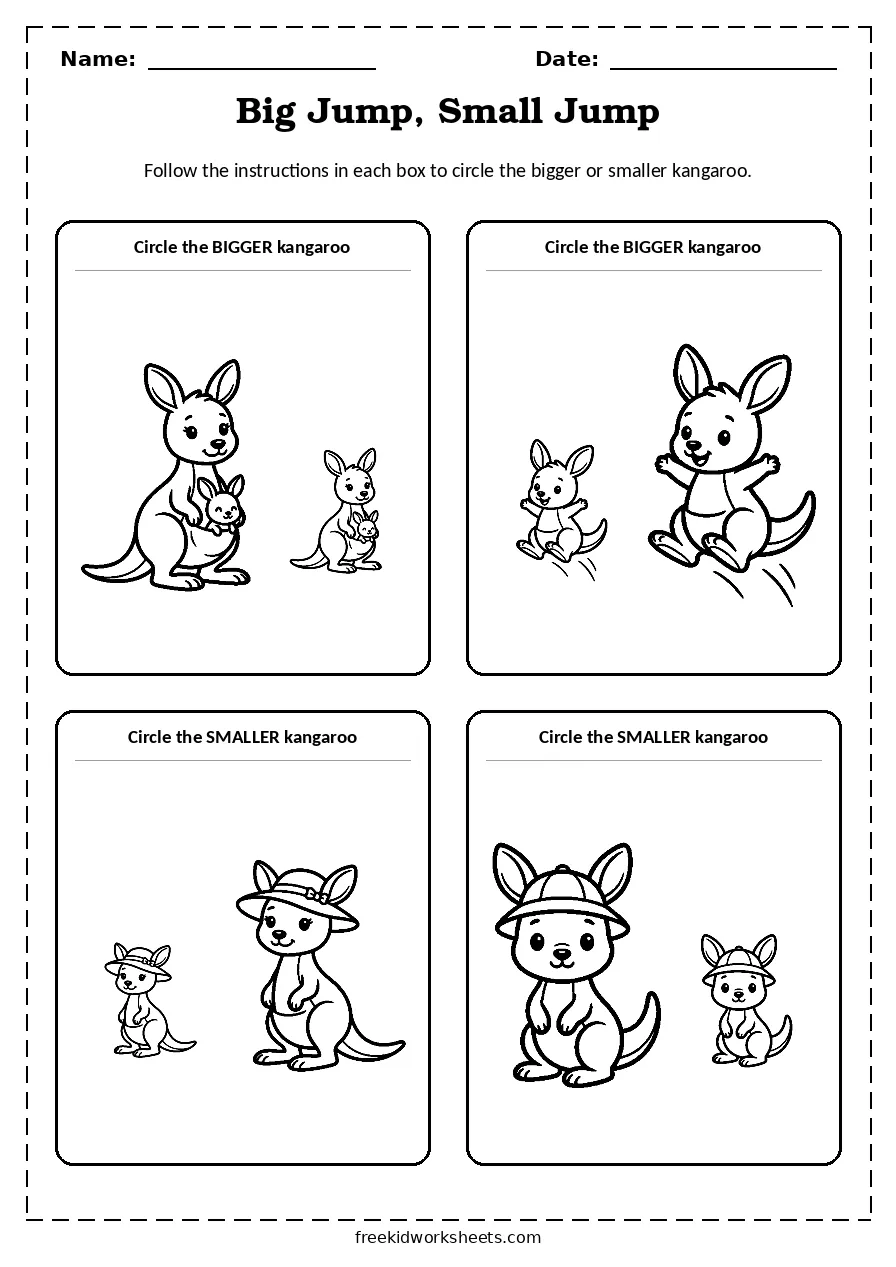
- Big jump small jump , ages 3-4
Browse counting & number sheets
Frequently asked questions
- What should my 4-year-old be able to do with numbers?
- By age 4 most children can count to 10, recognise a few written numerals, and understand "more" versus "less". Do not worry about writing numbers yet, counting real things out loud matters far more at this stage.
- How do these sheets teach number sense, not just memorising?
- The sheets pair every numeral with something countable, apples, stars, animals. Children touch each picture as they count, which connects the symbol "3" to the idea of three-ness. That connection is number sense.
- My child counts "1, 2, 5, 9…" — should I correct them?
- Gently, and without making it a test. Count together slowly, pointing at each object, and let them hear the right order many times. Rote sequence comes before accurate one-to-one counting for almost every child.
- When do we move from counting to addition?
- When counting to 20 is solid and your child can say which of two small groups has more without recounting. That is usually around age 5–6. Rushing into addition before counting is automatic creates shaky foundations.
- Are these math worksheets really free?
- Yes. Every sheet is free to download and print, with no account and no limits. Print the same page as many times as your child wants to practise.
Looking for more? Browse the full Math library or the complete worksheet library.