Alphabet Tracing Guide
Free printable A–Z tracing sheets that take children from first pencil strokes to confident letters, one dotted line at a time.
Why tracing comes before writing
Writing a letter from memory asks a young child to do three hard things at once: remember the shape, plan the strokes, and control the pencil. Tracing removes the first two, so all their attention goes into the feeling of the movement. That muscle memory is what later makes independent writing possible. Think of tracing sheets as training wheels, they come off on their own once the balance is there.
Tracing also teaches the often-ignored basics: starting at the top, moving left to right, and lifting the pencil between strokes. Children who trace first tend to form letters correctly later, instead of drawing them in whatever order feels natural and then having to unlearn it.
The order that works
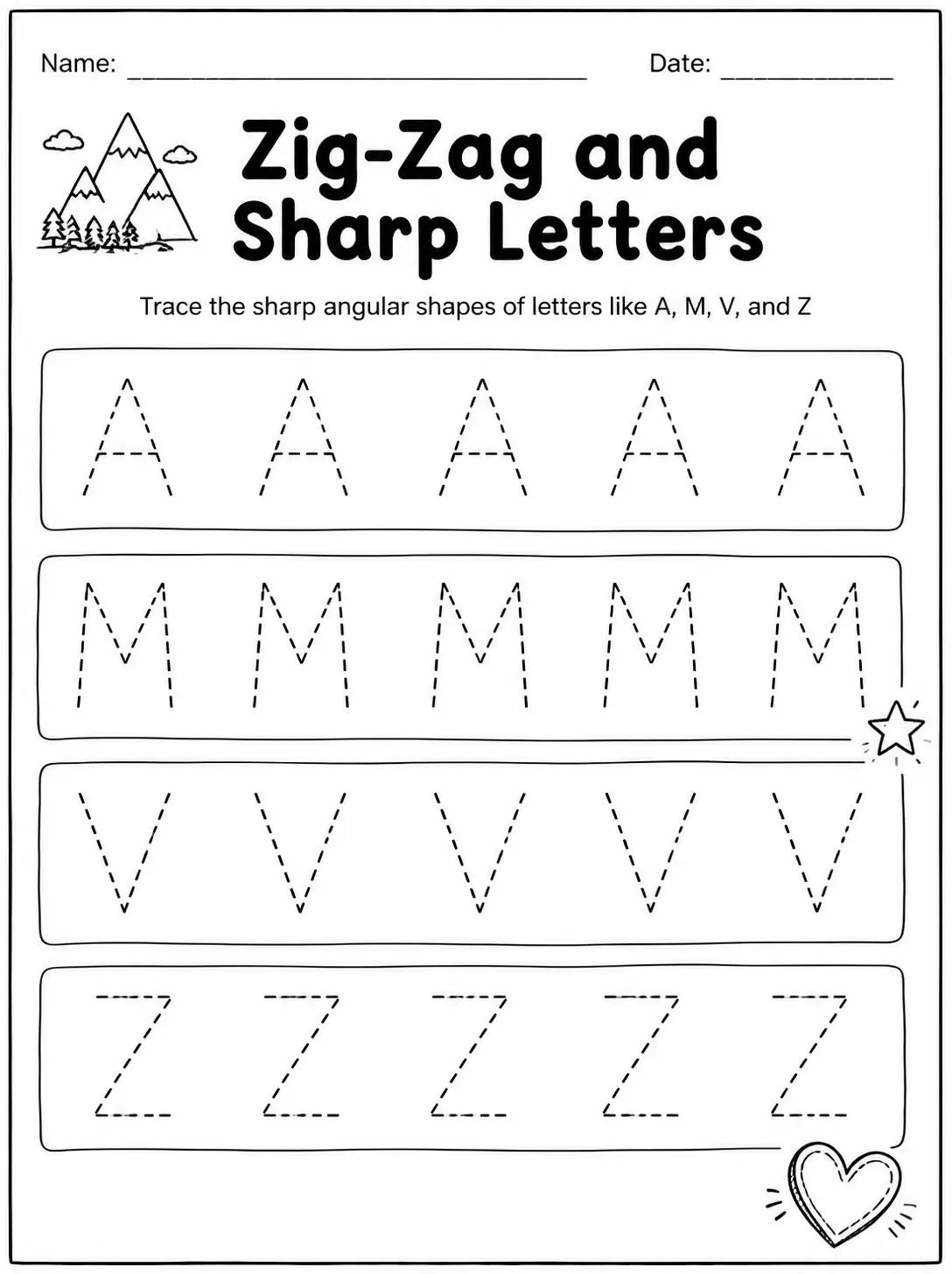
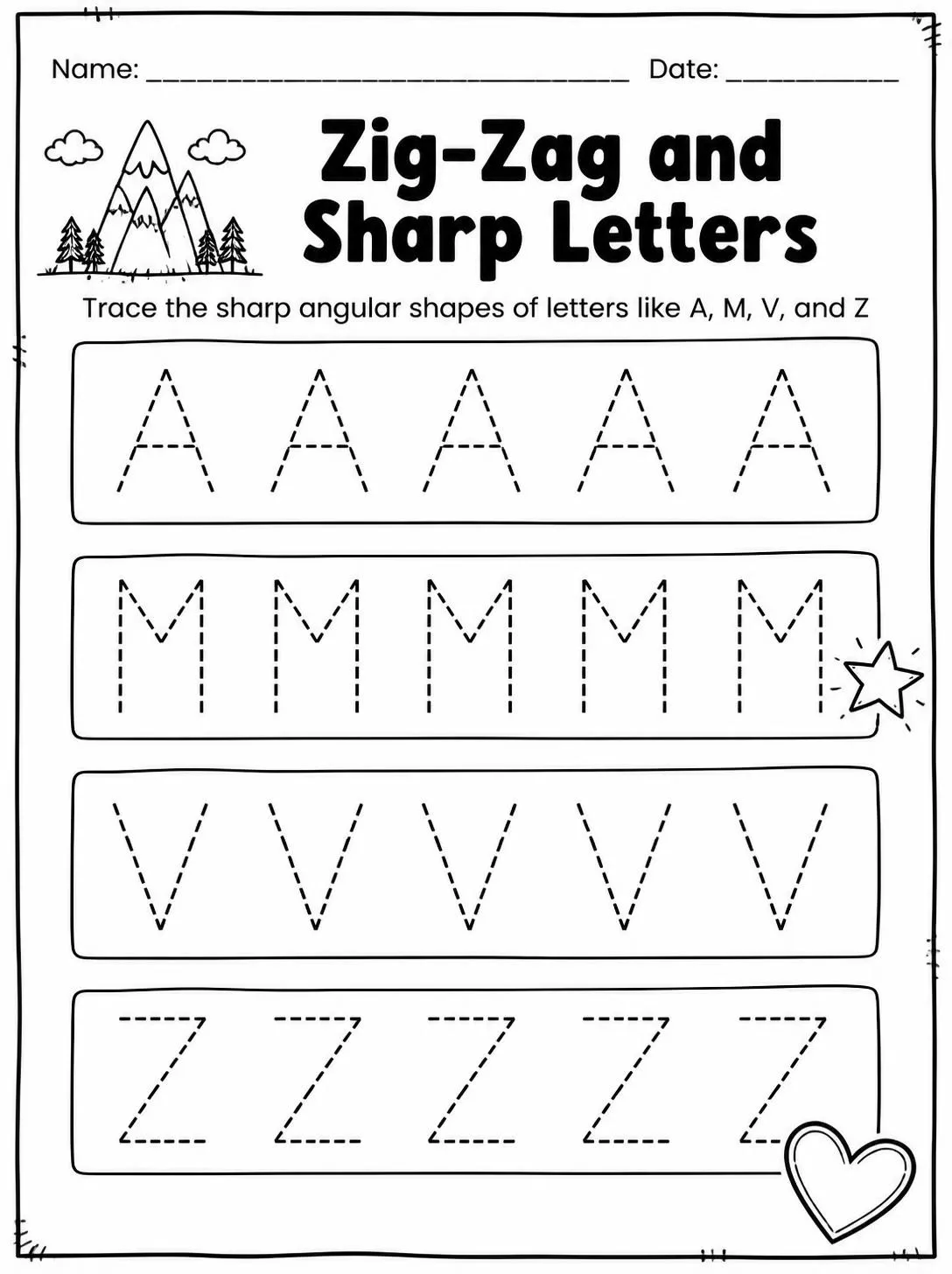
Not all letters are equally hard. The sequence that frustrates children least is: straight lines first (E, F, H, I, L, T), then letters with one curve (B, C, D, J, O, P, S, U), then the tricky ones with direction changes (K, M, N, R, V, W, X, Y, Z). Work through uppercase letters completely before introducing lowercase. Capitals are built from simpler strokes and give faster wins.
Before any letter at all, let brand-new pencil holders practise plain strokes: vertical lines, horizontal lines, circles, and zigzags. A week of stroke play makes the first real letter feel easy instead of intimidating.
How to use these sheets
Print at 100% scale on A4 with no page shrink, so the dotted lines stay crisp. Hand your child a thick pencil or a crayon, both are easier to grip than a standard pencil. Sit beside them for the first few sheets and trace one letter yourself, slowly, narrating as you go. Say: "start at the top, pull down, now across." Then let them take over.
- One or two letters per session is enough at first.
- Reprint favourite sheets. Repetition is the whole point.
- Praise the effort and the direction of strokes, not neatness.
- If frustration appears, drop back to an easier letter for a day.
Ready-to-print pack: A–Z starter set
New to tracing? Start with these ten sheets in order, they move from simple strokes to full letters. Print the whole set and work through one page a day.
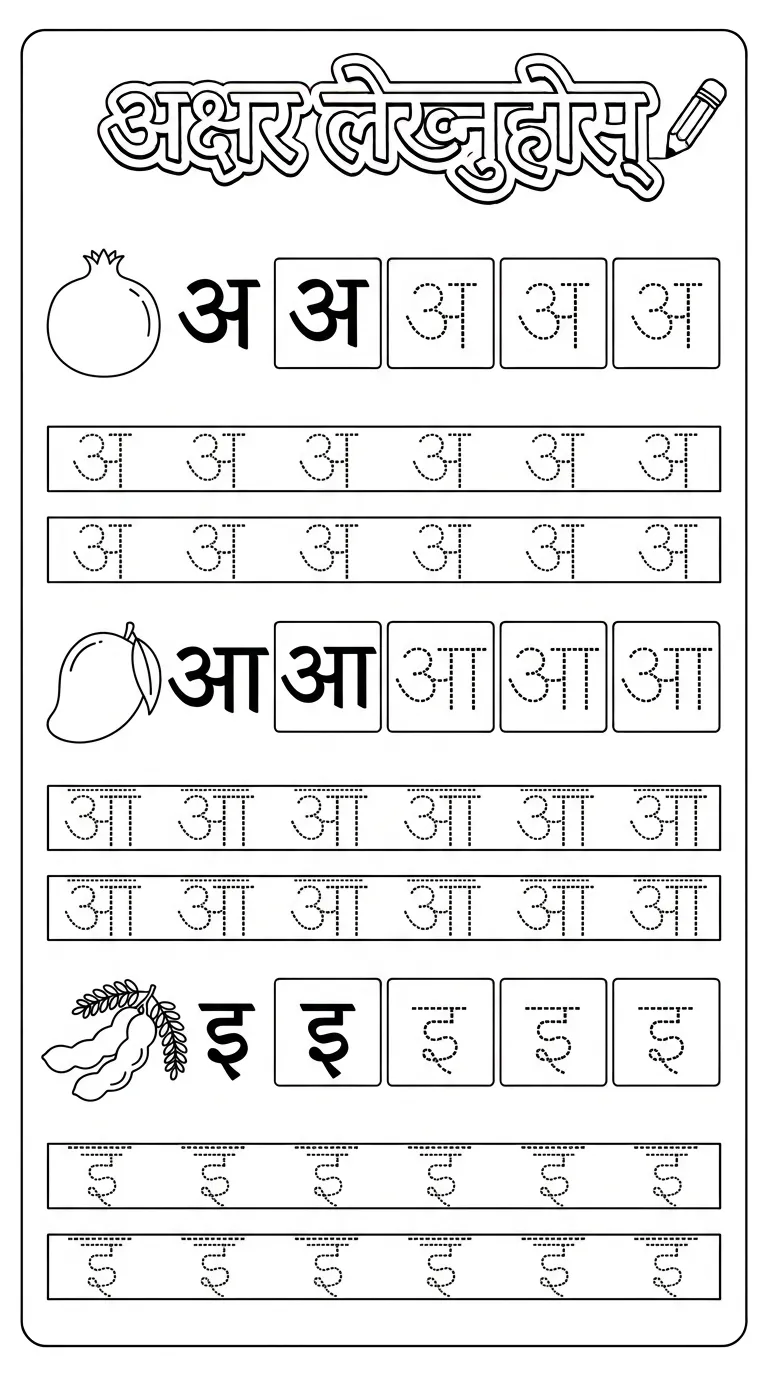
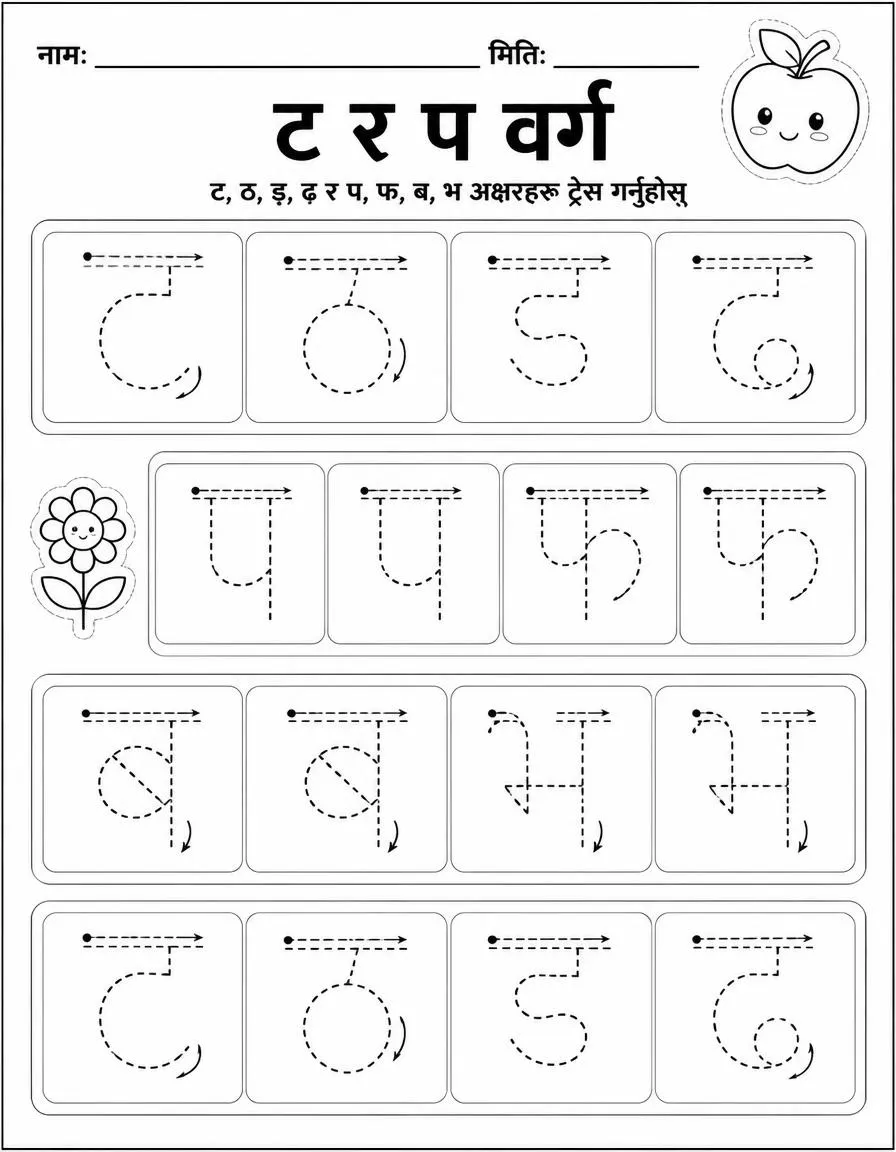
- A Aa I Nepali Vowel Tracing , ages 3-4
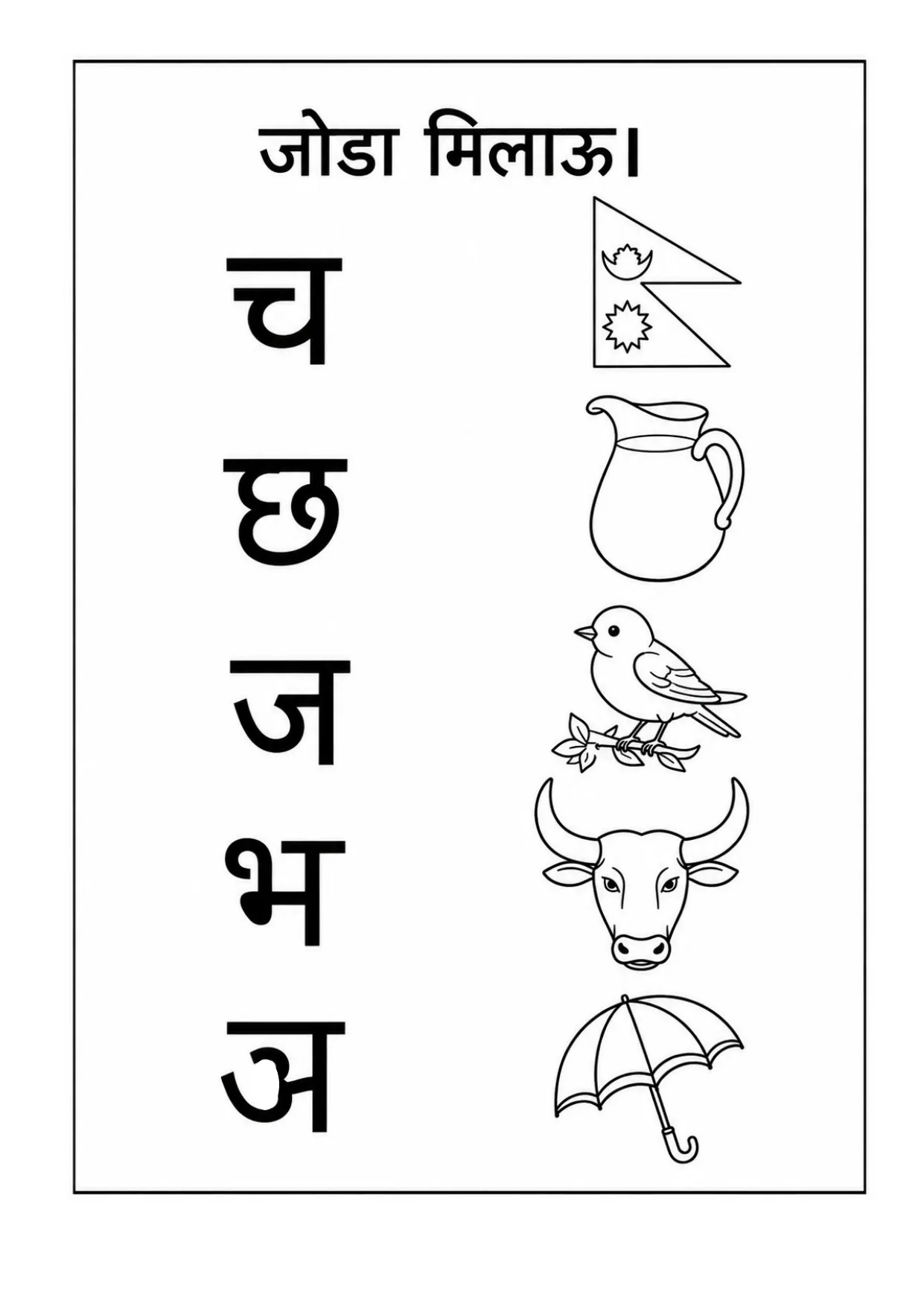
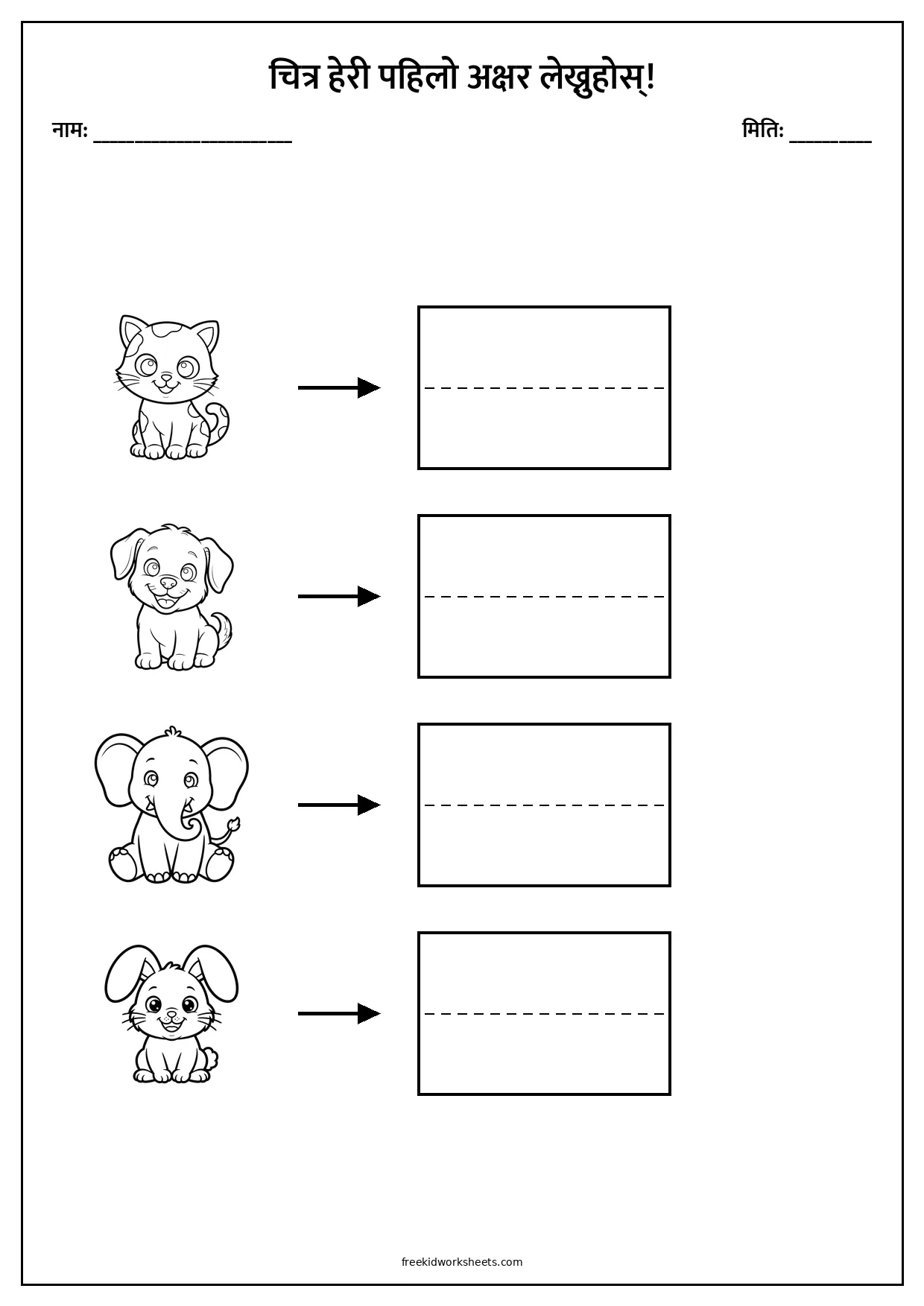
- Akshar herera joda milaunuhos , ages 3-4
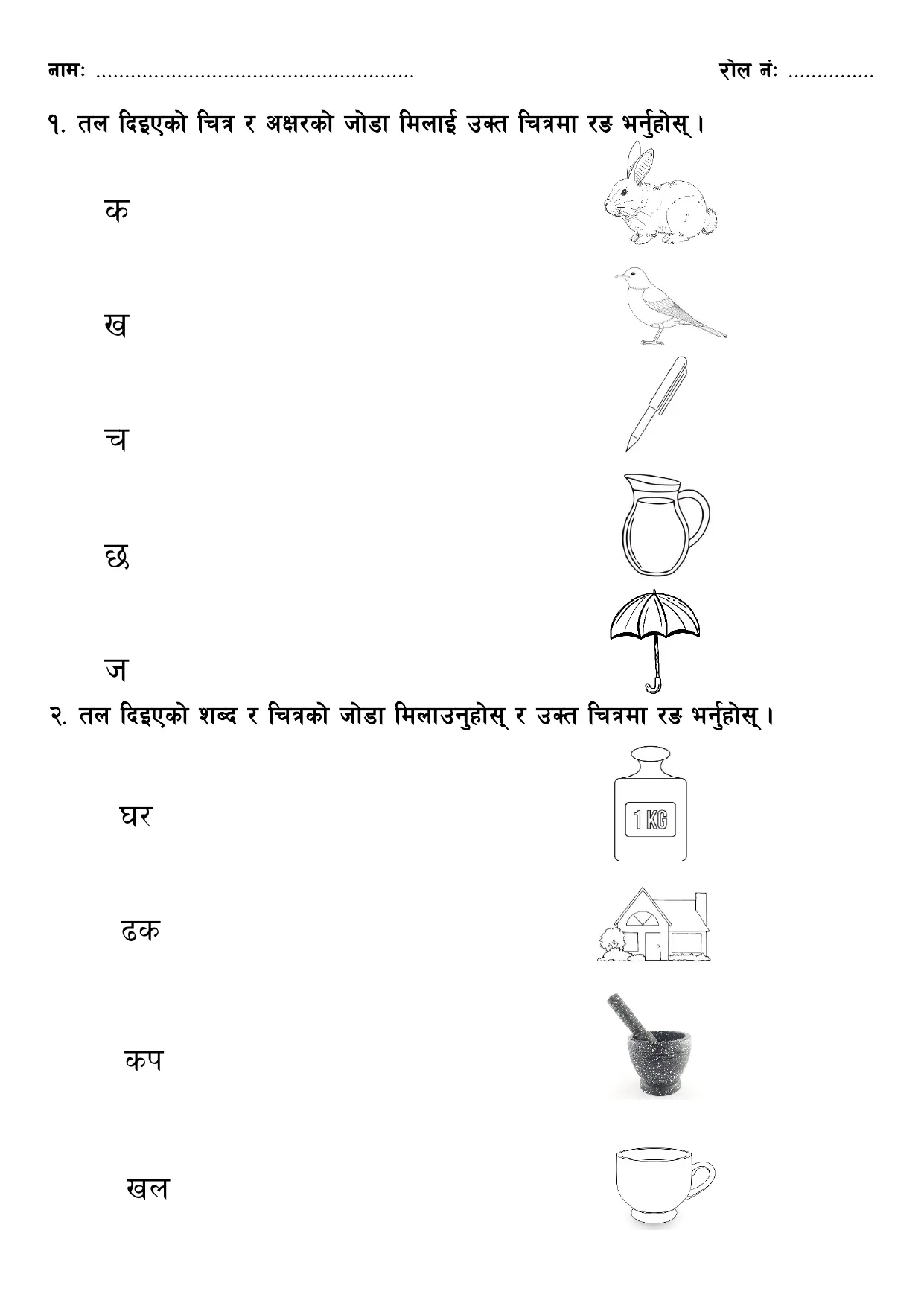
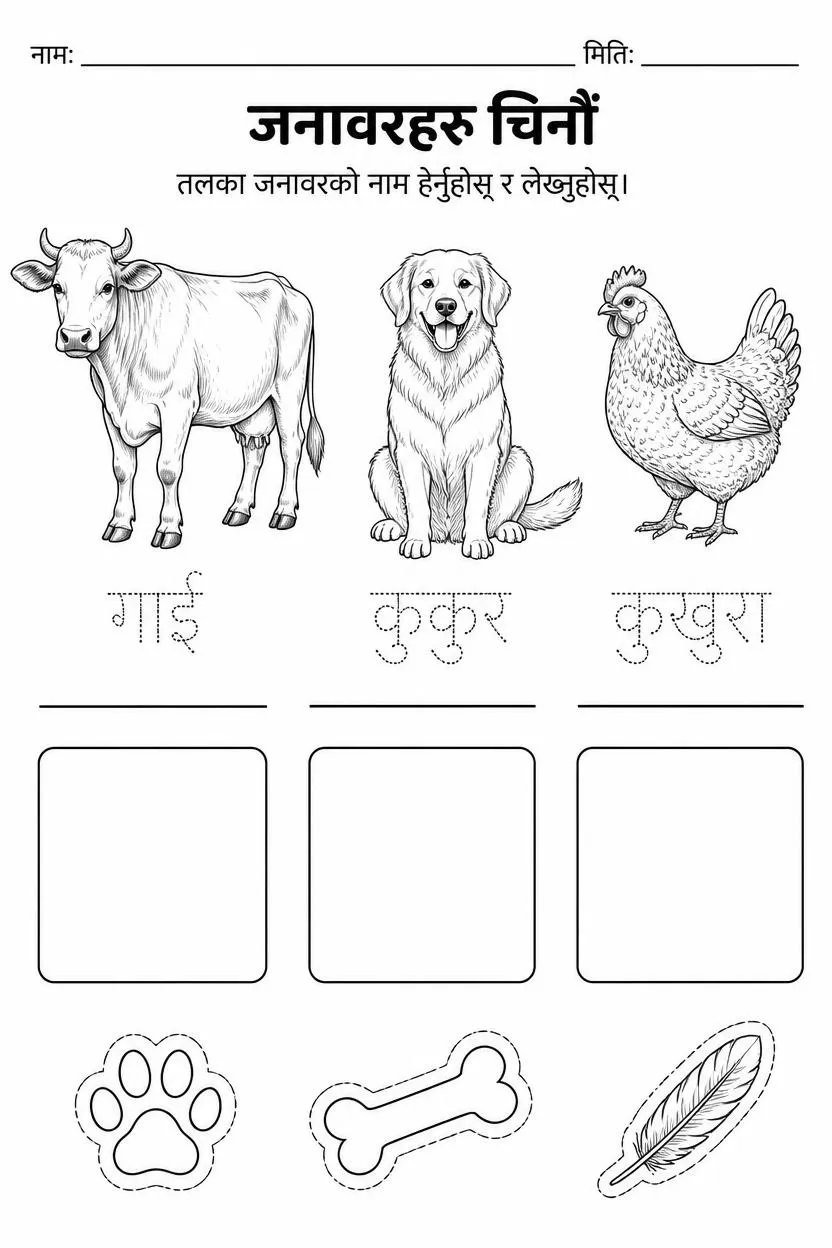
- Akshar ra chitra ko joda worksheet , ages 3-4
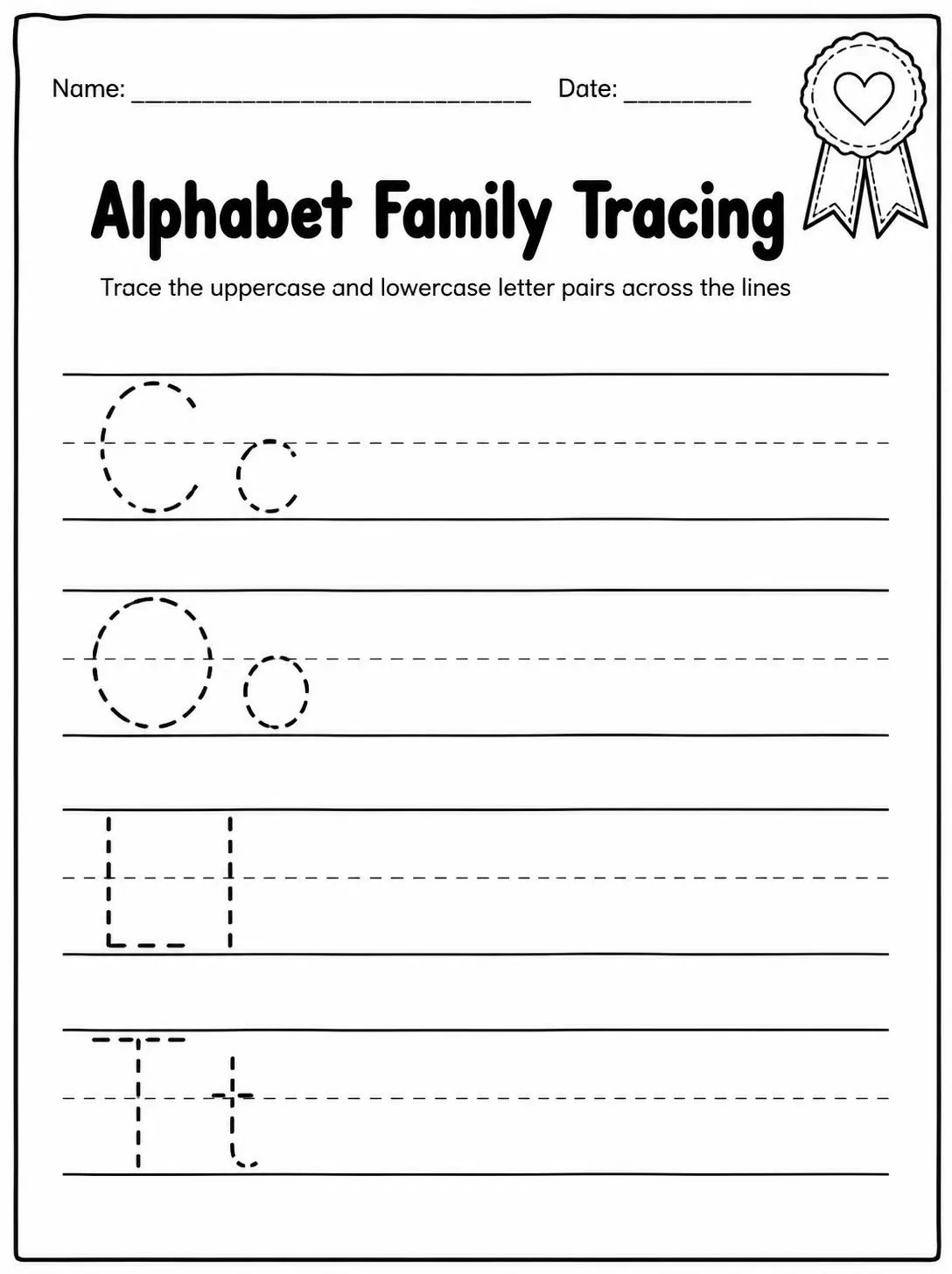
- Alphabet family letter tracing , ages 3-4
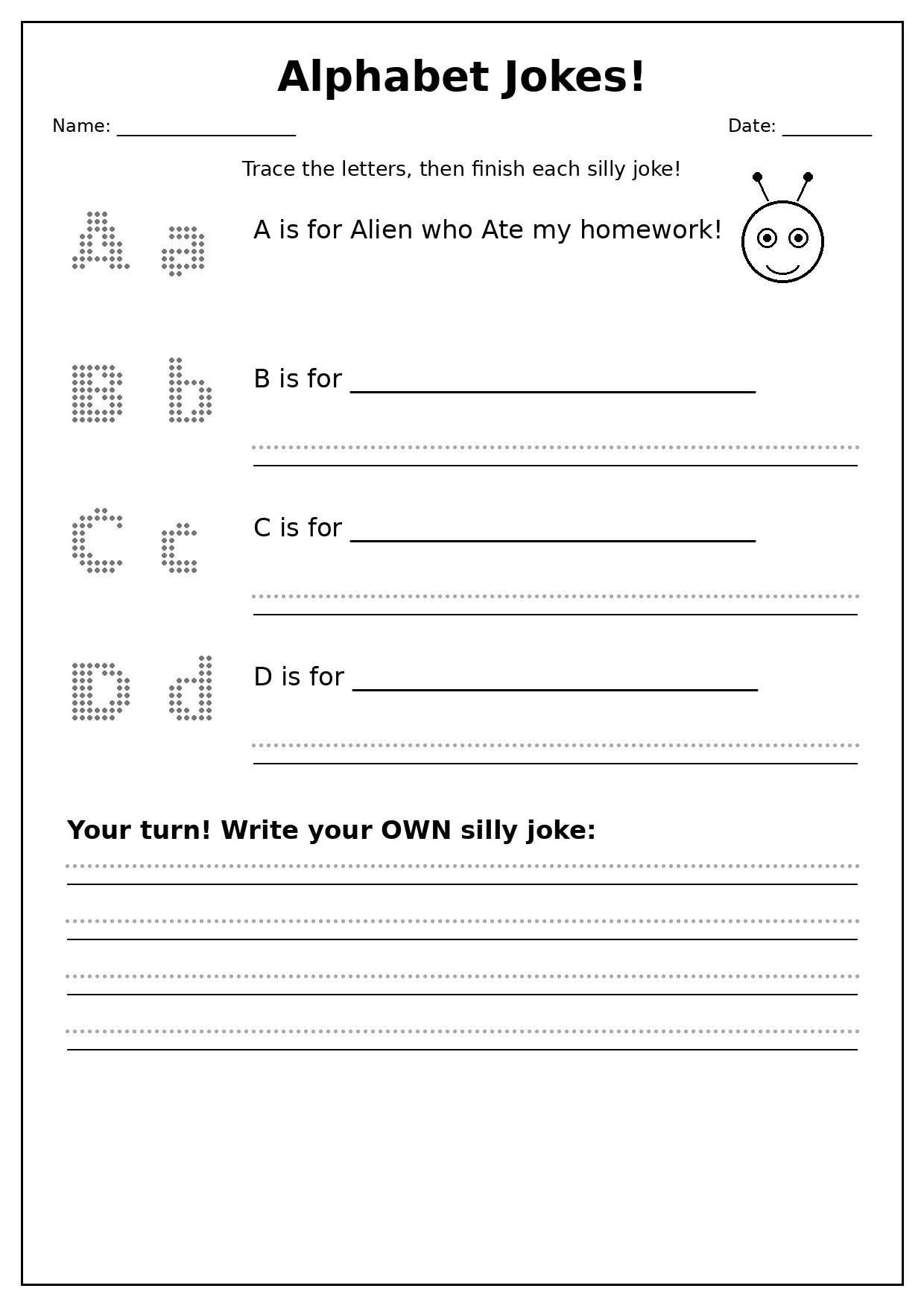
- Alphabet Jokes Writing Worksheet , ages 7-8
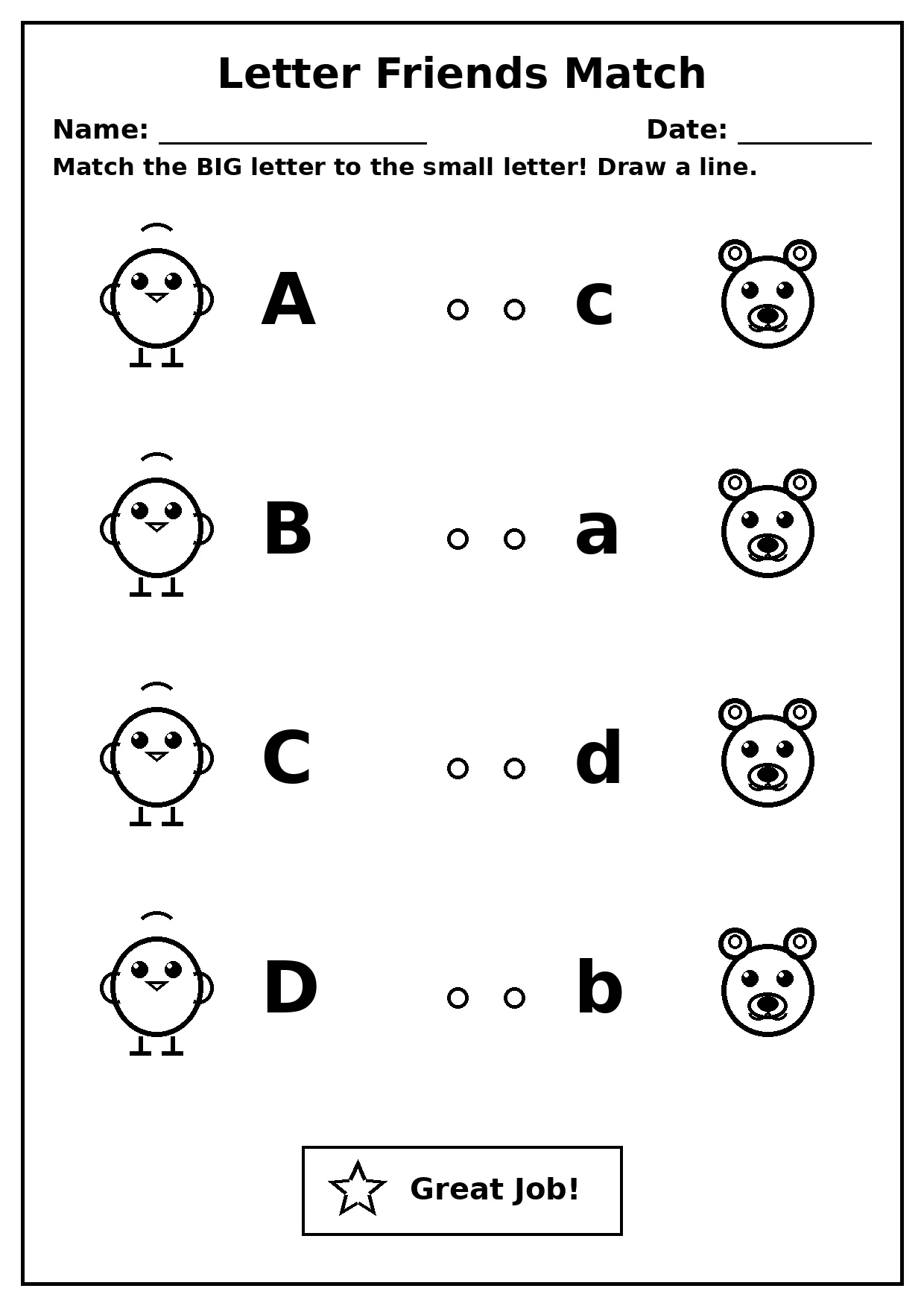
- Alphabet match mascots matching , ages 3-4
- Angular and looped consonant tracing , ages 3-4
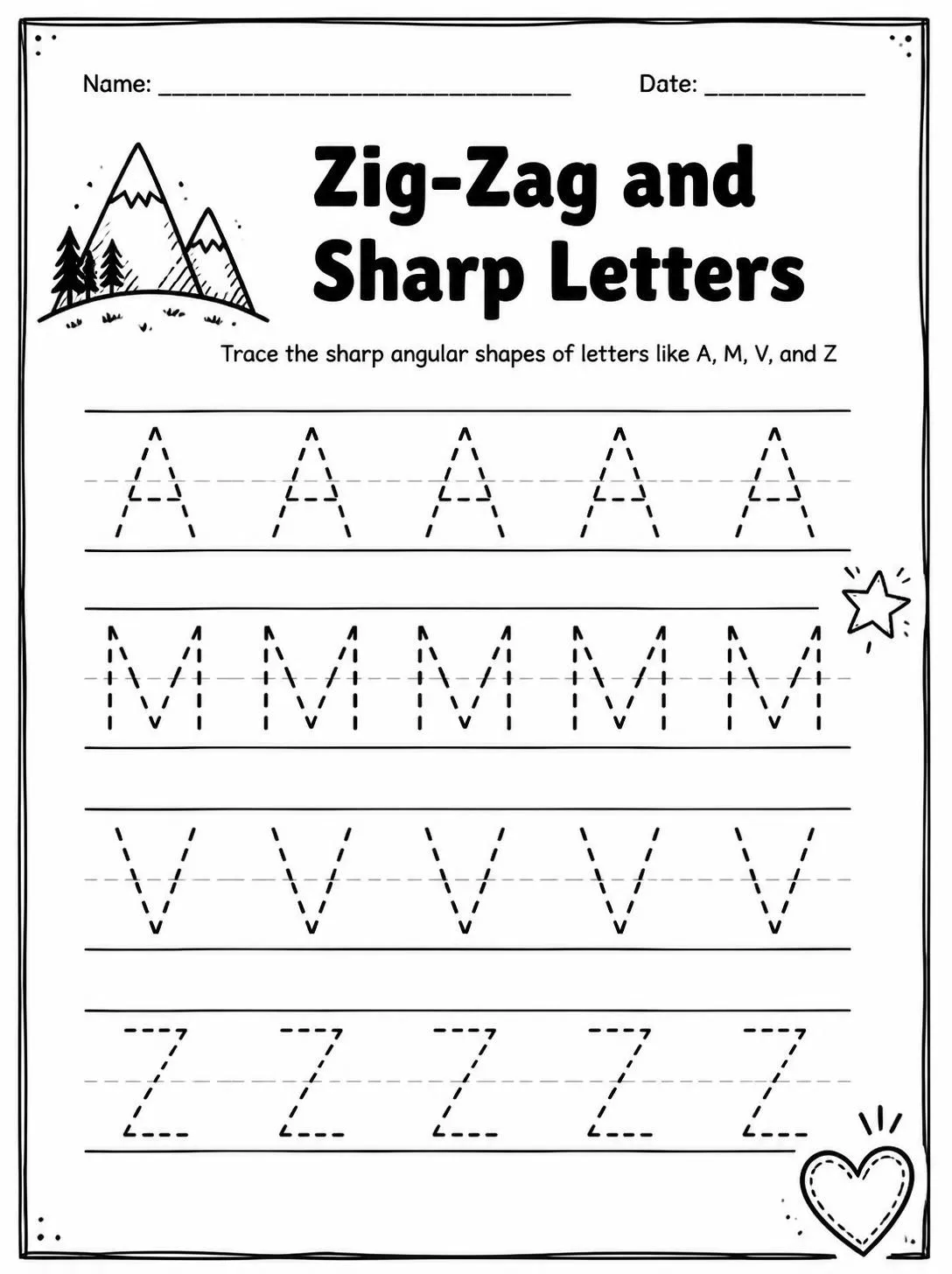
- Angular letter tracing worksheet , ages 3-4
- Angular letter tracing - preschool 2 , ages 3-4
- Angular letter tracing - preschool 3 , ages 3-4
Browse alphabet tracing sheets
Frequently asked questions
- When should my child start tracing letters?
- Most children are ready between ages 3 and 4, once they can hold a crayon and imitate a line you draw. Start with simple straight-line letters like E, F, H, I, L, and T before moving to curves like C, O, and S.
- Should we trace uppercase or lowercase letters first?
- Uppercase first. Capital letters are made of simpler strokes. Straight lines and big curves, so they are easier for small hands. Introduce lowercase letters once uppercase tracing feels comfortable, usually a few months later.
- How long should a tracing session last?
- Ten minutes is plenty for ages 3–4. Two short sessions a day beat one long one: little hands tire quickly, and tired hands practise bad habits. Stop while it is still fun.
- My child traces well but cannot write letters alone yet. Is that normal?
- Completely normal. Tracing, copying with a model nearby, and writing from memory are three separate stages. Expect several months of tracing before independent writing appears, the dotted lines are doing their job.
- Are these tracing worksheets really free?
- Yes. Every sheet is free to download and print, with no account and no limits. Print the same page as many times as your child wants to practise.
Looking for more? Browse the full Alphabet & Tracing library or the complete worksheet library.